March Into Mindful Tech: What Is a Screen Time Reset Before Spring Break and Why Does It Matter?

A Screen Time Reset before spring break is a proactive way for families to review digital habits, set clear expectations, and create healthier boundaries before vacation begins. It helps prevent screen overuse during unstructured days, protects sleep and mood, and ensures devices do not crowd out outdoor play, family time, and meaningful experiences.
As we march into March and spring break promises a much awaited break from school routines, a Screen Time Reset is a proactive way to pause, evaluate, and re-balance how devices are being used before vacation fully begins. It means looking at current screen patterns, identifying what feels out of control, and setting simple, realistic boundaries that reflect your family’s values.
Screen time resets matters because unstructured days often lead to longer gaming sessions, late night scrolling, and more frequent power struggles. Without the structure of school, screens easily fill every free moment. A thoughtful reset helps protect sleep, reduce conflict, and create space for connection, outdoor play, and meaningful family time.
In this article, we will share practical, parent friendly steps to guide your family through a successful Screen Time Reset. We will also explore how Mobicip can support you with content filtering, time limits, app blocking, and activity monitoring to make healthy tech habits easier to maintain.

Why a Screen Time Reset Is Required Before Spring Break
A Screen Time Reset is important before spring break because looser routines and increased free time can quickly lead to excessive gaming, scrolling, and late nights. Without clear expectations, screen habits expand rapidly. Resetting boundaries early helps families maintain balance, reduce conflicts, and enter vacation with structure instead of chaos.
Spring break often brings a sharp increase in screen use as routines loosen and excitement builds. Without clear expectations, devices can quickly take over unstructured days. A proactive screen time reset helps families stay ahead of this shift and maintain balance before vacation begins.
Looser Routines and Anticipation
As school assignments wind down, bedtimes become flexible and daily structure softens. Kids sense the upcoming freedom and often begin negotiating for extra screen time even before vacation starts. That gradual relaxation of rules can quietly reset habits in the wrong direction.
More Free Time and Fewer Structured Activities
Without homework, extracurriculars, and early mornings, children suddenly have long stretches of open time. Screens easily become the default activity. When nothing else is planned, devices naturally fill the gap.
Parents Balancing Work and Planning
Many parents are still working while managing travel plans or coordinating childcare. Devices can feel like an easy solution to keep kids occupied. Over time, convenience can turn into dependency
The “It’s Almost Vacation” Mindset
Children often view the days leading up to spring break as a reward period. This mindset can lead to relaxed rules and extended device use. Once expectations shift, it can be difficult to tighten them again.
Digital Habits Expand Quickly Without Limits
Even small increases in daily screen time can compound over a week. What starts as an extra thirty minutes can quickly turn into hours. Without boundaries, temporary changes can become long-term patterns
How Does a Pre-Spring Break Screen Time Reset Benefit Families?
A pre-spring break Screen Time Reset helps prevent screen marathons, protect sleep quality, reduce daily power struggles, and make space for real-world experiences. By setting expectations in advance, families can enjoy vacation with fewer conflicts and more intentional technology use that supports connection and well-being.
A thoughtful reset before spring break helps families move into vacation with clarity instead of chaos. A pre-spring break reset helps with:
- Preventing a full-blown screen marathon: Without structure, screen time can easily stretch into hours of gaming, streaming, or scrolling. Setting limits early keeps usage intentional rather than unlimited.
- Protecting sleep and mood: Increased screen exposure and later bedtimes can disrupt sleep patterns. Well-rested kids are more cooperative, emotionally steady, and ready to enjoy their break.
- Reducing power struggles during vacation: When rules are unclear, daily negotiations increase. Clear expectations ahead of time reduce arguments about “just five more minutes.
- Making space for real-world experiences: Spring break offers opportunities for outdoor play, creativity, and family connection. A reset ensures devices do not crowd out these meaningful moments.
How Do You Start a Screen Time Reset Before Spring Break?
Starting a Screen Time Reset involves reviewing current screen habits, setting clear daily limits, creating device-free windows, and planning meaningful alternatives to screen use. Small, intentional changes work better than sudden bans. The goal is to create sustainable habits that support balance during vacation.
A successful Screen Time Reset does not require extreme rules or sudden device bans. Small, intentional adjustments can help your family move into spring break with balance and clarity. The goal is to create healthier patterns that feel sustainable, not restrictive.
Step 1: Start With a Family Screen Time Check-In
Before making changes, take time to understand your current habits.
- Review current screen habits
Look at how much time is being spent on devices, which apps are used most often, and when screens are typically accessed. - Ask kids what they think is working
Involving children in the conversation builds cooperation and reduces resistance. - Identify one or two areas to adjust
Focus on manageable shifts, such as limiting evening screen use or shortening gaming sessions.
Step 2: Set Clear Spring Break Screen Expectations
Clarity helps prevent daily arguments.
- Define daily screen time limits
Decide what amount of recreational screen time feels reasonable during vacation. - Create screen-free windows
Protect certain times of day, such as meals, mornings, or one family night each week. - Decide where devices are and are not allowed
Keeping bedrooms or the dinner table device-free can make a big difference.
Step 3: Replace, Don’t Just Remove
A Screen Time Reset works best when screens are replaced with meaningful alternatives.
- Plan outdoor and creative activities
Schedule park visits, crafts, reading time, or simple home projects. - Build in family time
Add board games, shared cooking, or a local outing to your plans. - Create a simple spring break activity list
Having ideas ready prevents boredom from turning into default screen use.
Step 4: Use Tools That Make the Reset Easier
Parents do not have to manage everything manually.
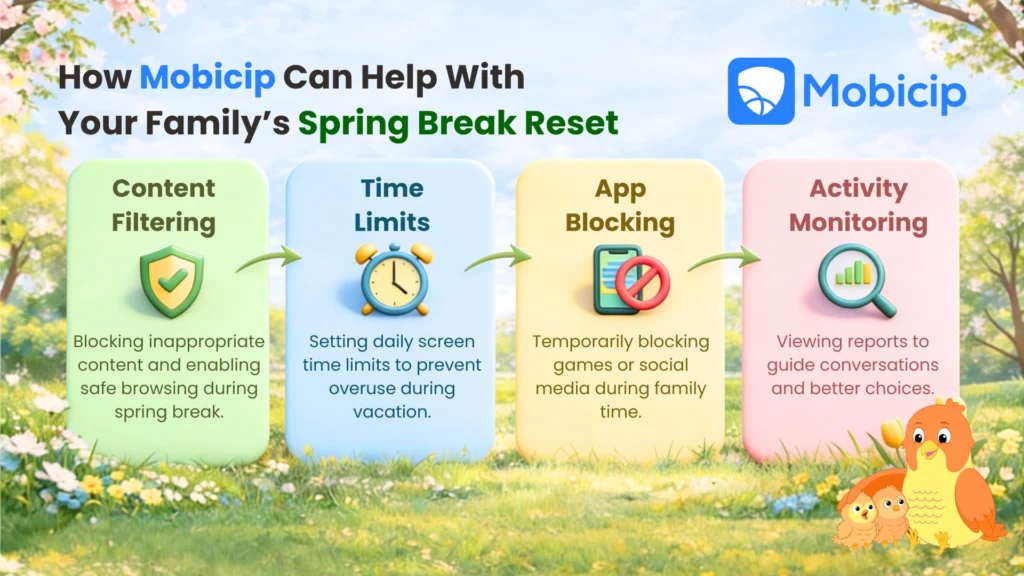
- Use content filtering to keep browsing safe
This adds a layer of protection while children explore online. - Set time limits to prevent overuse
Automated limits reduce constant reminders and negotiations. - Block distracting apps during family time
Temporarily pausing certain apps protects shared moments. - Monitor activity to guide conversations
Activity reports help parents have informed and calm discussions about digital habits.
Tools like Mobicip can support your Screen Time Reset by making boundaries easier to set and maintain, helping your family move into spring break with healthier, more intentional tech use.

What Is the 7-Day Screen Time Reset Plan Before Spring Break?
The 7-Day Screen Time Reset plan guides families through auditing screen habits, updating tech rules, adjusting device settings, planning activities, and reinforcing healthier digital routines. Each day builds gradually, helping families transition into spring break with clarity, consistency, and more mindful technology use.
If you are not sure where to begin, a simple seven-day plan can make your Screen Time Reset feel manageable. Each day builds on the last, helping your family move toward spring break with clarity and confidence.
Day 1: Audit Screen Time: Take a realistic look at how devices are being used. Check screen time reports, note the most used apps, and observe when usage tends to spike.
Day 2: Have the Conversation: Sit down as a family and talk about what you noticed. Ask your children how they feel about their current screen habits and where they think improvements could be made.
Day 3: Update Family Tech Rules: Based on your discussion, revise or clarify your tech guidelines. Keep rules simple, specific, and easy to follow.
Day 4: Adjust Device Settings: Set time limits, enable content filters, and create screen-free schedules. Tools like Mobicip can help automate these changes.
Day 5: Plan Spring Break Activities: Create a short list of outdoor outings, creative projects, and family experiences to prevent boredom.
Day 6: Try a Screen-Free Evening: Choose one evening to unplug together and enjoy a shared activity.
Day 7: Celebrate Progress: Acknowledge the effort everyone has made. Reinforce positive changes and carry them into spring break.
Conclusion
Spring break does not have to mean eliminating screens entirely. The goal is not to remove technology from your child’s life, but to create balance. A thoughtful Screen Time Reset helps families move from reactive rules to intentional habits that support connection, rest, and fun.
Aim for intentional tech use. Encourage your children to think about why they are using a device and how it fits into their day. When screens are planned rather than constant, they become one part of vacation instead of the main event.
Focus on progress, not perfection. There will be days when limits stretch or routines slip. What matters most is returning to the boundaries you set and modeling healthy digital behavior yourself.
Stay consistent even when schedules shift. Whether you are traveling or staying home, simple guidelines around time limits, device-free moments, and safe browsing create stability. With the right tools like Mobicip and a clear plan, spring break can feel connected, balanced, and truly refreshing for the whole family.
FAQ
What Is a Screen Time Reset Before Spring Break?
A Screen Time Reset before spring break is a proactive way for families to review and adjust digital habits before vacation begins. It involves evaluating current screen use, setting clear expectations for the break, and creating simple boundaries around when and how devices are used. The goal is not to eliminate screens, but to prevent overuse during unstructured days.
Why Should Families Do a Screen Time Reset Before Spring Break?
Spring break often brings more free time and fewer routines, which can lead to increased screen use. A Screen Time Reset helps prevent late nights, mood changes, and daily power struggles. By setting expectations early, families can protect sleep, encourage outdoor play, and reduce conflicts during vacation.
How Do I Start a Screen Time Reset With My Kids?
Start by reviewing current screen habits together. Look at screen time reports, discuss what is working, and identify one or two changes to make before spring break. Involving children in the conversation increases cooperation and makes the reset feel collaborative rather than punitive.
What Are Healthy Screen Time Limits During Spring Break?
There is no one-size-fits-all rule, but a Screen Time Reset can help you define limits that fit your family. Many parents choose to set daily recreational screen limits, create screen-free windows such as during meals, and keep devices out of bedrooms at night.
How Can Parental Controls Support a Screen Time Reset?
Parental control tools like Mobicip can make a Screen Time Reset easier to maintain. Features like content filtering, time limits, app blocking, and activity monitoring help parents stay consistent without constant reminders. This creates structure while still allowing children to enjoy technology responsibly during spring break.