
The January Digital Reset: Helping Kids Build Healthier Screen Habits
A new year brings with it a sense of renewal. Families reflect on the months gone by and think about what they want more of, and less of, in the year ahead. There are quiet hopes, fresh aspirations, and small resolutions shaped by everyday life: better routines, calmer mornings, more presence, and healthier habits for both parents and children.
When it comes to digital life, the new year is a natural moment to start afresh. Healthier screen habits are built through intention, not sudden cutbacks. Our Screen Time in 2025 analysis of Mobicip-managed devices showed a clear pattern: screen use responds to routines, rules, and active parental involvement.
This post looks at how families can reset after the holidays and help kids build healthier screen habits that last through the year. From easing back into routines to setting realistic boundaries and reinforcing expectations at key ages, we’ll explore practical ways parents can guide screen use with confidence. We’ll also look at how tools like Mobicip support this process, helping parents stay consistent, reduce daily friction, and turn good intentions into habits that hold long after the holiday season ends.

What is Digital Reset?
A digital reset doesn’t mean cutting screens out of your child’s life or declaring sudden, hard limits that are impossible to sustain. For many parents, the idea of a “reset” can sound overwhelming, especially after the holidays, when screen time may already feel out of control. In reality, a digital reset is about recalibration, not restriction.
Rather than focusing on how much screen time to remove, a healthier approach is to rethink how screens fit into everyday life. This shift helps reduce conflict and makes boundaries easier for children to understand and accept.
A digital reset is all about:
- How screens are used, purposeful use rather than default scrolling
- When screens are used, around routines like school, sleep, and family time
- Why screens are used, for learning, connection, or relaxation, not just habit
When screens are guided by intention and structure, children learn to use them more mindfully. A digital reset helps families move away from constant negotiation and toward clearer expectations, making screen habits more sustainable, not just for January, but for the year ahead.
Digital Reset by Age
Children’s relationship with screens evolves as they grow, and a successful digital reset takes those developmental changes into account. Each stage calls for a slightly different focus, what stays consistent is the need for clarity, structure, and ongoing parental involvement.
Early childhood
Young children benefit most from limited, intentional screen use that supports learning and connection.
- Use screens for specific purposes (for example, a short educational video or a video call with grandparents)
- Avoid background screens (turn off the TV when no one is actively watching)
- Keep screen time short and predictable (one 20-minute session after lunch)
- Prioritize offline play (blocks, drawing, outdoor play instead of default screen use)
Middle childhood (ages 6–10)
This stage is ideal for strengthening habits, as children understand rules and thrive on routine.
- Reinforce clear boundaries (screens only after homework is finished)
- Maintain screen-free times (no devices during meals or before bed)
- Balance activities (one hour of screen time balanced with outdoor play)
- Stay involved (talk about a game or show they enjoy)
Pre-teens (ages 11–13)
As independence grows, expectations around devices and online spaces need to be clearly reset.
- Reset device rules (phone use allowed only in shared spaces)
- Set limits on social apps (approved apps only, with time limits)
- Discuss online responsibility (what to share, and not share, online)
- Gradually increase freedom (later screen time on weekends only)
Teens
For teenagers, structure and communication are more effective than outright restrictions.
- Anchor screens to routines (no screens after 10 p.m. on school nights)
- Set expectations around priorities (schoolwork before gaming or social media)
- Keep conversations open (regular check-ins about online experiences)
- Guide rather than control (monitor usage patterns instead of banning apps)
How Tools Like Mobicip Support Digital Reset
A January digital reset works best when parents don’t have to rely on constant reminders or repeated negotiations. Tools like Mobicip are designed to support healthy habits in the background, making consistency easier while keeping parents firmly in control.
Mobicip supports the reset through features that help parents guide screen use:
- Screen time schedules: Parents can set daily routines for school hours, homework time, and bedtime. This helps screens fit naturally around a child’s day instead of interrupting it.
- Daily limits and app controls: Mobicip enforces screen time limits and app-level rules automatically, reducing arguments and removing the need for repeated warnings or bargaining.
- Usage insights and reports: Parents can see clear patterns in how devices are used over time, making it easier to spot holiday spikes, late-night use, or overreliance on certain apps and adjust limits accordingly.
- Age-based controls that grow with the child: As children get older, parents can gradually loosen restrictions while keeping core safeguards in place, supporting independence without losing oversight.
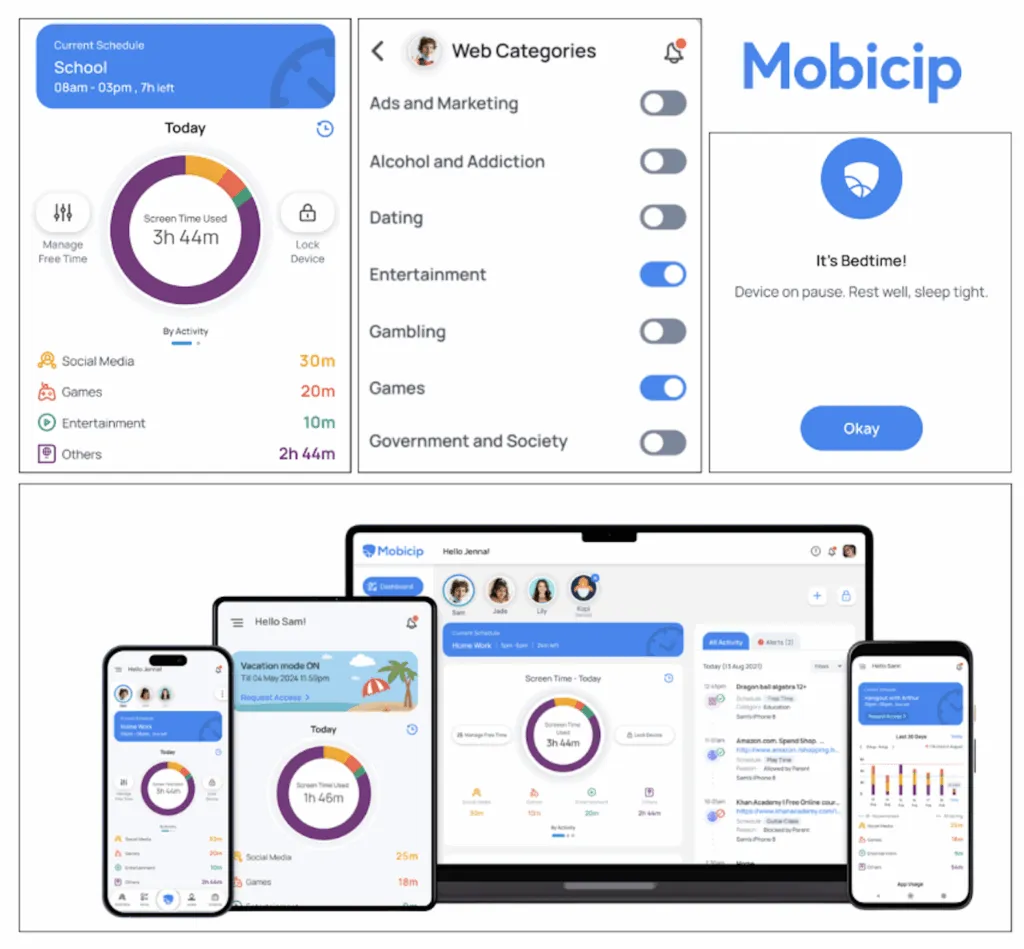
By taking care of the structure behind the scenes, Mobicip helps families turn a January reset into sustainable, year-round digital habits.
What to Expect During the Reset
A digital reset rarely happens without a few bumps along the way. Understanding what to expect can help parents stay calm, consistent, and confident.
Some challenges are normal:
- Pushback and boundary testing – Children may negotiate, complain, or resist new limits, especially after a relaxed holiday schedule.
- Slips during busy days – Homework, work deadlines, travel, or illness can make screens the easiest option. Occasional exceptions don’t undo progress if routines are restored afterward.
- Progress is not linear – Habits improve gradually, with steps forward and occasional setbacks. Consistency over time matters more than perfection.
Keeping these points in mind helps families stay patient and focused. A successful reset is about steady guidance, reinforcement, and the willingness to adjust boundaries when necessary, rather than expecting immediate perfection.
The Role of Parental Modeling
Children don’t just listen to what we say about screens, they watch what we do. Parental modelling plays a powerful role in shaping how children understand and accept digital boundaries. When adults practise the same habits they expect from their kids, rules feel fairer and trust is easier to build.
Children naturally mirror adult screen behaviour. Constant phone use, scrolling during conversations, or screens at the dinner table quietly signal what is “normal.” When parents are mindful of their own screen habits, it reinforces the message that boundaries apply to everyone, not just children.
Shared rules feel more reasonable when the whole family follows them. Simple agreements, like no phones during meals or putting devices away before bedtime, are easier for children to accept when parents do the same.
Small changes can make a big difference. Putting phones face down during conversations, stepping away from screens during family time, or setting personal screen limits all help create a healthier digital environment. These everyday choices model balance and make a January digital reset feel like a shared effort, not a one-sided rulebook.
Take Away
A digital reset is not just a January project. It’s an invitation to rethink how technology fits into family life and to create a home where screens serve purpose rather than habit. It’s a chance to observe, adjust, and celebrate small wins along the way, and to involve children in shaping their own healthy routines. Over time, these intentional choices become habits, not restrictions, giving children the tools to manage their own digital lives responsibly. The skills children develop now – mindful usage, self-regulation, and understanding limits – lay the foundation for a healthier relationship with technology that lasts for life.