Mental Health Awareness Month: How Screen Time Is Shaping Young Minds
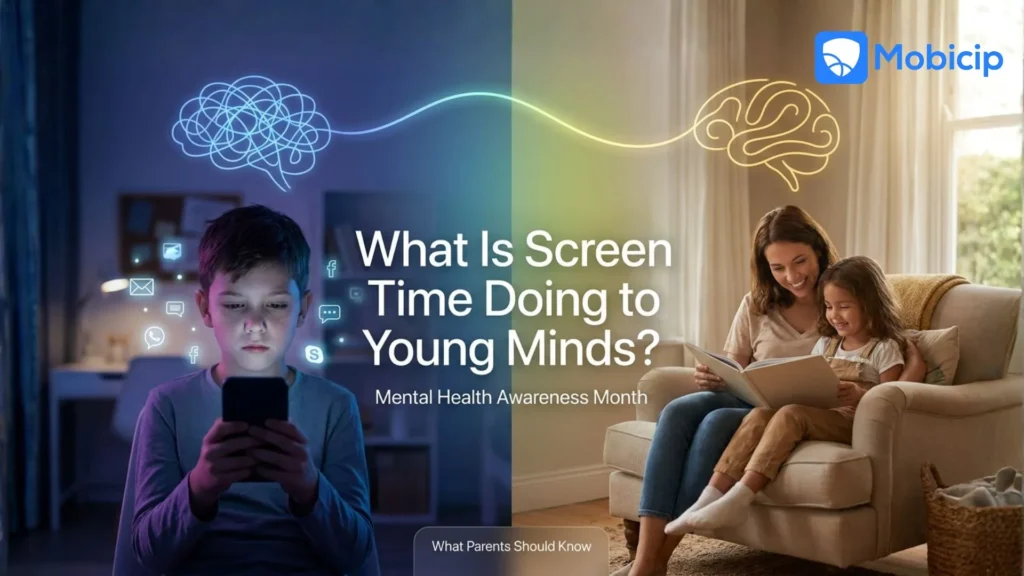
May is Mental Health Awareness Month that prioritizes emotional and psychological well-being. This is especially important in a world where screen time is increasingly shaping young minds.
For today’s children, screens are ever-present, used for learning, entertainment, and social interaction. This constant exposure makes the topic deeply relevant for parents, as concerns grow around attention span, sleep disruptions, emotional regulation, and the pressures of online spaces.
This article explores how screen time influences young minds, highlighting both its benefits and potential risks. It also offers practical ways parents can create healthier digital habits, with support from tools like Mobicip that help families better manage screen use .
How Screen Time Affects the Mental Health of Kids
Screen time is not inherently harmful. However, the way, duration, and context in which children engage with screens can significantly influence their mental and cognitive development. From how they focus and process information to how they sleep, feel, and connect with others, digital exposure plays a powerful role in shaping everyday experiences and long-term habits.
Attention, Focus, and Cognitive Development
Frequent exposure to fast-paced, highly stimulating content can make it harder for children to sustain attention on slower, real-world tasks like reading or problem-solving. Over time, this may impact concentration, patience, and deeper cognitive processing, especially in younger children whose brains are still developing.
Emotional Well-being and Mood Changes
Excessive screen use, particularly on social or entertainment platforms, can affect mood and emotional stability. Children may experience irritability, anxiety, or low self-esteem, often linked to overstimulation, comparison, or constant digital engagement without enough offline balance.
Sleep Disruption and Its Ripple Effects
Screens, especially before bedtime, can interfere with sleep quality by suppressing melatonin and overstimulating the brain. Poor sleep doesn’t just cause fatigue, it can affect memory, behavior, emotional regulation, and overall mental health.
Social Skills and Real-World Interaction
While screens can connect children virtually, they may reduce opportunities for face-to-face interaction. This can impact the development of essential social skills like empathy, communication, and reading non-verbal cues.
We at Mobicip take children’s mental health very seriously and are committed to helping parents navigate healthy digital habits. You can explore a range of articles on this topic on our blog, where we regularly share insights and practical guidance for families.
You may read some related posts here:
Understanding Digital Anxiety in Children
Are Social Media Filters Impacting Teen’s Mental Health?
Doomscrolling and why it impacts your family’s mental health
Screen time and kids health: what parents need to know
Social Media and Child Anxiety: A Holiday Guide for Parents
Mental Health Problems in Kids due to Excessive Screen Time
Research shows a clear link between high screen time and poorer mental health outcomes in children and teenagers. Studies from organizations like the CDC and Yale University highlight increased risks of anxiety, depression, and related behavioral challenges, especially when screen use replaces sleep, physical activity, and social interaction.
- Higher risk of anxiety and depression (CDC):
About 1 in 4 teenagers with 4 hours or more of daily screen time have experienced anxiety (27.1%) or depression symptoms (25.9%) in the past 2 weeks. - Lower emotional and peer support (CDC):
Teens with high screen use are more likely to report reduced emotional support (48.6% vs 35.1%) and weaker peer support (37.0% vs 30.4%). -
Increased mental health risks across conditions (Yale University study):
A large study of over 50,000 children (ages 6–17) found that 4+ hours of daily screen time was associated with higher risks of anxiety, depression, behavioral problems and ADHD
The research highlights that screen time affects mental health indirectly through:
- Reduced physical activity (strongest factor)
- Irregular bedtime routines
- Shorter sleep duration
Supporting Kids’ Mental Health Through Healthier Screen Habits
Supporting children in the digital age is not about eliminating screens entirely, but about guiding their use in a balanced and intentional way. Small, consistent changes at home can significantly improve how children engage with technology and how it affects their well-being.
Setting Realistic Screen Time Boundaries
Instead of strict or unrealistic restrictions, set clear and flexible limits that suit your child’s age and daily routine. Consistency matters more than perfection, helping children understand when and how screen use is appropriate.
Encouraging Offline Activities and Play
Balance screen time with offline experiences like outdoor play, hobbies, reading, or family time. These activities support creativity, physical health, and emotional development while reducing overdependence on devices.
Building a Daily Routine That Works
A structured routine that includes study time, physical activity, screen time, and rest helps children develop healthier habits. In particular, keeping screens away from bedtime can improve sleep quality and emotional regulation.
Leading by Example
Children often mirror adult behavior. When parents model balanced screen use, such as limiting phone use during meals or prioritizing offline interaction, it reinforces healthier habits naturally and consistently.
How Mobicip Brings Parents Peace of Mind Around Screen Time
Managing children’s digital habits can be stressful, especially when it’s unclear how much time they spend online or what content they are exposed to. Mobicip gives parents clear visibility and simple control over screen use, leading to greater confidence and peace of mind.
Screen time limits that prevent overuse
Parents can set daily or weekly limits, ensuring children maintain a healthy balance between online and offline activities without constant reminders or arguments.
Content filtering for safer browsing
By blocking inappropriate or harmful content, parents can feel reassured that children are exploring the digital world in a safer, age-appropriate environment.
Activity monitoring for better awareness
Insight into app usage and browsing habits helps parents understand patterns early, reducing anxiety about what children are doing online.
Routine-friendly controls that reduce conflict
Automated schedules (like bedtime or study-time restrictions) help maintain structure without repeated supervision, making daily management smoother and less stressful.
Conclusion
As May – Mental Health Awareness Month begins, let’s take a closer look at how everyday habits shape children’s emotional well-being. It’s a reminder that mental health is built through small, consistent choices that influence how children think, feel, and cope.
Screen time is now an inseparable part of childhood, making balance more important than ever. When technology is woven thoughtfully into routines, alongside rest, play, and real-world connection, children are better supported in developing emotional stability and resilience.
This month is not about concern alone, but awareness and intention. It offers families a chance to gently reset habits so that digital life supports childhood rather than overwhelms it.
Frequently Asked Questions
How does screen time affect children’s mental health?
Excessive screen time can impact attention, sleep, mood, and social development. It is also often linked to higher risks of anxiety and depression in children.
What is a healthy amount of screen time for kids?
There is no single fixed number. Experts recommend focusing on balance—ensuring screen use does not replace sleep, physical activity, learning, or real-world interaction.
Can all screen time be harmful for children?
No. Educational and creative screen use can support learning and skills. Problems often arise when screen time is passive, excessive, or poorly balanced.
What can parents do to reduce screen-related mental health risks?
Parents can set consistent boundaries, encourage offline activities, maintain daily routines, and guide children toward healthier digital habits at home. Apps like Mobicip can help parents in this.