Inside the POV Trend: How Kids Experience Today’s Short Videos
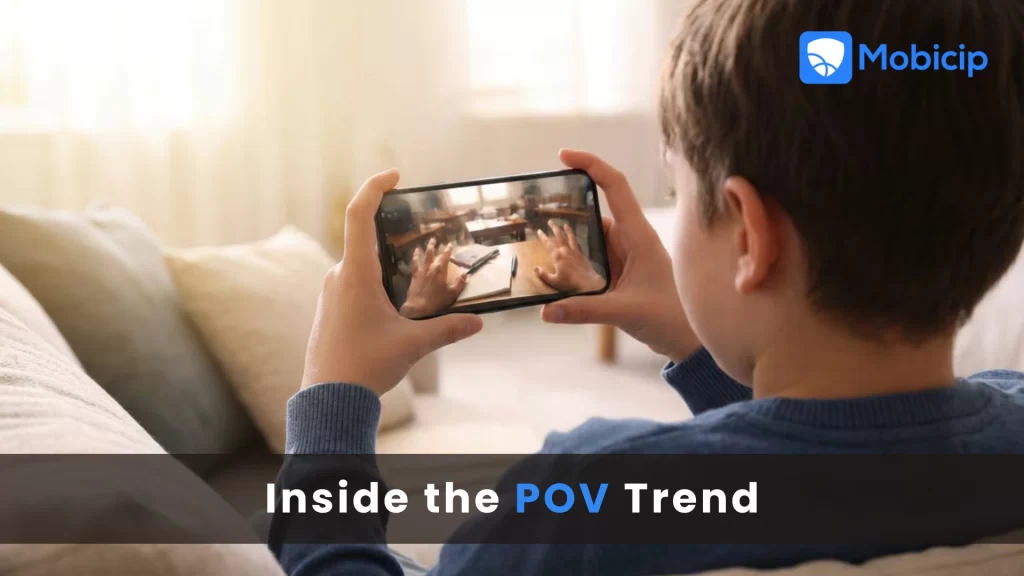
The POV trend (Point of View trend) refers to short-form video content that places the viewer directly inside a scenario, making them feel personally involved in the experience. Popular across platforms like TikTok, Instagram Reels, and YouTube Shorts, the POV trend is especially engaging for kids and teens due to its immersive and emotional format.
While largely harmless, POV videos can influence how children think, feel, and respond online. Unlike traditional videos, POV content blurs the line between observer and participant, which can intensify emotions, shape behaviour, and encourage imitation. For younger viewers, especially, this immersive format can amplify social pressure, emotional attachment to creators, and exposure to content that may not be age-appropriate.
This is where parental guidance and digital safety tools like Mobicip play an important role. By helping parents monitor short-form video platforms, manage screen time, and filter content, Mobicip supports families in creating healthier online experiences without cutting kids off from the digital world they are growing up in.
In this article, we take a closer look at the POV trend in short videos and how adolescents experience it. We explore why this format is so engaging, the emotional and behavioural effects it can have on children and teens, and how parents can respond with awareness, conversation, and practical safeguards.

POV Trend: Types of POV Videos Kids Watch
Point of View videos (more commonly known as POV videos) are a genre of short-form content found on platforms like TikTok and Instagram that illustrate a variety of scenarios with the creator playing one or multiple characters within that scenario. The ones which stick to the traditional meaning of the term “POV” involve the viewer in the scenario, casting them as a character in the story or situation at hand. The POV trend has evolved into multiple formats, each shaping how young viewers emotionally connect with short videos.
While this may be a more accurate use of the trend, it is also common to see POV videos that do not directly involve with the audience and instead use the term/trend to act out various scenarios without audience participation. These videos are merely phrased in a way that addresses the audience (e.g.: “POV: you’re at the grocery store and the queue is too long.”) but the action itself is largely independent. This latter method is largely not relevant to the idea of interactivity that is examined later in this article but can, along with the former, be used to propagate questionable themes that will be further discussed in this section.
What are the types of POV videos out there?
The trend can be used as one pleases, essentially, with its only real limit being the imagination of the creator. However, there are some broad categories that emerge with regard to this trend. These include:
Humorous & Relatable POVs
These include relatable jokes about school, family, friends, and other facets of daily life. These are largely harmless although, of course, jokes in poor taste are expected to be found somewhere in the mix. Below are given two examples of this category. It is interesting to note that the first screenshot is a version of the POV trend that actively involves the viewer while the second is the creator themselves acting out the scenario described.
Vent POVs
These are another form of relatable content except they are more negative or sad in nature. They are framed as “vents” and can serve as relatable to many facing the same problems or insecurities. For example, a video with the caption “POV: everyone else is doing better than you.”
These can be useful forms of catharsis and help adolescents know they’re not alone in their feelings. It is, however, important to not get caught in an algorithmically-enhanced spiral of such videos as this may eventually stop helping and instead simply reinforce negative beliefs.
Fictional POVs
Several POV videos script and perform a variety of fictional, story-driven scenarios. The creators in these cases may cosplay original or existing fictional characters. It is common to find POVs describing fantasy worlds and characters with the creator acting out or depicting fictional scenarios within those worlds. For example, “POV: you’re an elf caught in a war for your kingdom…”
Adult-themed POVs
These are videos that subtly cross age boundaries. The POV trend is littered with romance-centred scenarios and stories. These form a part of the aforementioned story-driven POVs. While they can be quite harmless, “dark romance” and other mature content that features in such videos can be age-inappropriate. It can be similarly inappropriate when adult creators target minors in their interactive or mature POV content.
How the POV Trend Works on the Brain
The unique appeal of POV videos – or, at least, the ones which involve the viewer – is their interactive nature. The concept of using interaction to engage with an audience is as old as the Socratic method. Its notable use in learning stems from the fact that it is known to help learners with better understanding and retention.
Interactivity in storytelling is yet another established use of engaging an audience. Artforms like theatre (specifically subsets of theatre like pantomimes) and video games make use of interactive storytelling to better convey their message. The interactivity of video games, in specific, helps in immersing players and providing them an enhanced sense of entertainment. It provides them with a sense of agency and involvement. Thispaper examining what users like about interactive storytelling (chiefly video games) notes in them a sense of accomplishment and increased self-worth upon progressing within the story and an active sense of engagement or absorption in completing various tasks.
These observations help understand what might make POV videos so compelling. By addressing and involving the viewer, they pull them in and provide a heightened sense of relatability. Their easy-to-consume short-form nature further adds to this appeal. Even videos that exist independent of the audience appeal to their sense of empathy by addressing them directly in the content depicted.
When the POV Trend Becomes Harmful for Kids
The POV trend is, at this point, so large that it’s used across genres and for a variety of purposes. It’s impossible to paint all POV content with a singular brush. However, there are certain broad scenarios in which this type of content can turn harmful. These include:
- When a parasocial bond forms between the viewer and the creator. The interactive, highly personal nature of certain subsets of POV content can lead to a blurring of the boundaries between reality and fiction.
- When mature POV content reaches adolescents before they are ready or of a suitable age.
- When adult creators target minors in their POV content, especially that of a romantic or sexual nature.
- When teens become addicted to POV content, caught in a spiral, especially of videos that increase feelings of negativity and low self-worth.
- When POV content promotes other harmful or unsafe behaviour
Emotional & Behavioural Effects Parents May Notice
When teens are being negatively affected by the content they consume online, parents may notice certain behavioural signs, including:
- Increased emotional intensity after watching
- Mood shifts tied to screen time
- Over-identification with creators
- Strong reactions to likes, comments, or views
How To Talk To Kids About POV Videos (Without Shutting Them Down)
Should parents identify such a pattern of behaviour, it is important to approach it gently, addressing the issue while not shutting down one’s ward or appearing overly confrontational. Some conversation starters include:
“How did that video make you feel?”
“Do you think that’s real life or performance?”
“What do you think the creator wants you to do or feel?”
It is important to invoke in adolescents a sense of curiosity. This may, in many cases, prove more effective than outright control, especially in the long run.
How Parental Control Tools Help Manage the POV Trend
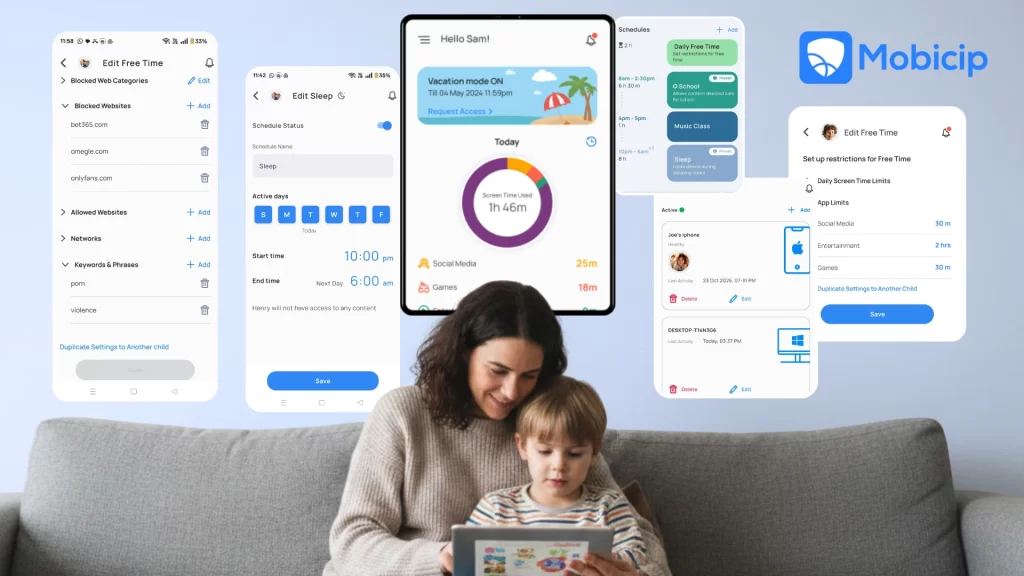
Parental control tools such as Mobicip can prove useful in scenarios where parents and adolescents have a difficult time coping with the pressures of parenting in and navigating the digital world. Mobicip provides a host of services for parents to effectively support their children in taking their first steps into the online space, including:
- Monitoring short-form video platforms
- Filtering age-inappropriate content
- Understanding viewing patterns
- Supporting conversations with data
Mobicip’s blog also contains posts discussing various topics related to digital safety that parents can read to stay informed.
Conclusion
On the Internet today, trends such as POV videos are common and for the most part in good fun. Extreme cases and malicious actors are always a threat but one that can be combatted. When it comes to digital safety and emotional wellbeing online, awareness, balance, healthy conversation, and targeted support are key.