How Endless Feeds Rewire the Teenage Brain
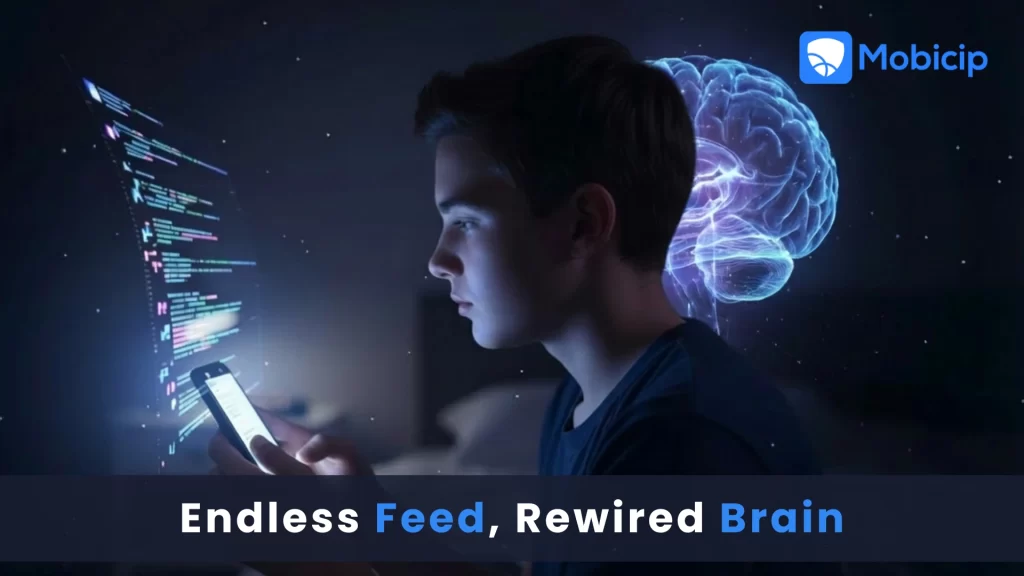
Endless feeds rewire the teenage brain by continuously activating the reward circuitry, making it harder for teens to disengage from app after app and video after video. Endless feeds — where content refreshes automatically with no stopping point — pull users from one piece of content to the next, especially affecting teenage attention and emotional processing.
This topic matters because the teenage brain is still developing, especially in areas related to self-control, emotional regulation, and long-term decision-making. Endless feeds are built around novelty, rewards, and social feedback, features that strongly activate the brain’s reward system. Over time, this can shape how teens focus, manage boredom, process emotions, and seek validation, both online and offline.
This is where parental guidance and tools like Mobicip can make a meaningful difference. Mobicip helps families understand how much time teens spend on apps with endless feeds, set healthy screen time limits, and reduce exposure to content that may negatively affect well-being, all while supporting open conversations rather than constant conflict.
In this essay, we explore how endless feeds interact with the teenage brain, the behavioral and emotional effects parents often notice, and practical ways families can guide teens toward healthier, more intentional digital habits.

How Endless Feeds Rewire the Teenage Brain: Vulnerability Explained
The teenage brain is still developing, and this ongoing process shapes how teens experience digital content. During adolescence, different brain systems mature at different speeds, creating a natural gap between emotional sensitivity, reward-seeking, and self-control. This imbalance helps explain why endless feeds, short videos, and algorithm-driven platforms can feel especially hard for teens to resist.
How Endless Feeds Trigger the Teenage Brain’s Reward System
During the teenage years, the brain’s reward system becomes especially active. This system responds to novelty, pleasure, and social approval, and is closely tied to dopamine, a chemical that motivates the brain to seek rewarding experiences. Endless feeds trigger dopamine in small, repeated bursts by offering unpredictable content and social feedback. Each swipe carries the possibility of something engaging, which keeps the brain alert and curious. Likes, comments, and views further reinforce this cycle by signaling approval and belonging. Over time, these micro-bursts of excitement make disengaging feel difficult, even when teens intend to stop. This response reflects how digital platforms are designed, not a lack of discipline.
Why Endless Feeds Overpower Teenage Self-Control
While the reward system is highly active, the part of the brain responsible for self-control develops more slowly. The prefrontal cortex, which supports planning, impulse control, and decision-making, continues to mature well into the mid-twenties. This means teens can understand limits but still struggle to follow through on them consistently. When scrolling begins, the ability to pause, reflect, and stop requires mental effort that is still developing. Endless feeds reduce natural stopping cues, making it harder for teens to practice restraint in the moment. This gap between awareness and action is a normal part of adolescent brain development.
Emotions Outpace Regulation
Emotional centers in the teenage brain also develop early, increasing sensitivity to feelings such as excitement, stress, and social comparison. At the same time, regulation skills that help manage these emotions are still forming. Endless feeds intensify this imbalance by presenting emotionally charged content in rapid succession. Teens may move quickly from humor to comparison to anxiety without time to process each feeling. Scrolling can then become a way to cope with boredom, stress, or discomfort, even when it doesn’t actually resolve those emotions. This pattern reflects emotional development, not emotional weakness.
How Endless Feeds Rewire the Teenage Brain’s Focus & Attention
Endless feeds are built for speed, novelty, and constant stimulation. Over time, this can reshape how teens focus and engage with information. When the brain becomes used to rapid rewards and quick emotional hits, activities that require sustained attention can begin to feel harder and less appealing.
Some of the most common changes parents and teens notice include:
- Shortened attention spans: Teens may find it harder to stay focused on a single task, switching quickly between activities or losing interest when stimulation slows down.
- Difficulty with boredom or unstructured time: Quiet moments can feel uncomfortable, leading teens to reach for their phones as soon as there is a pause.
- A preference for fast, emotionally charged content: Videos or posts that trigger excitement, humor, or outrage tend to hold attention more easily than slower, neutral content.
- Trouble switching to effort-based tasks: Activities like homework, reading, or studying require patience and mental endurance, which can feel especially challenging after long periods of scrolling.
Emotional & Behavioral Effects of How Endless Feeds Rewire the Teenage Brain
Extended time on endless feeds can influence how teens feel, behave, and relate to others. These changes often emerge gradually and may vary from teen to teen. Rather than indicating a problem, they can serve as useful signals that a teen’s emotional and social systems may be feeling overstimulated or out of balance.
Emotional Shifts
Parents commonly notice changes in mood and emotional regulation after screen use, particularly following long scrolling sessions. These may include:
- Mood swings after screen use, where teens appear energized while online but subdued or unsettled afterward
- Increased irritability or restlessness, with small frustrations feeling harder to manage
- Heightened anxiety or comparison, driven by constant exposure to curated highlights of others’ lives
- Emotional “numbness” or stimulation seeking, where quieter moments feel flat and require extra stimulation to feel engaging
Social and Behavioral Shifts
In addition to emotional changes, parents may observe shifts in social behavior and daily habits over time, such as:
- Greater reliance on online validation, using likes or views as measures of self-worth
- Fear of missing out (FOMO), creating pressure to stay constantly connected
- Reduced patience in real-world interactions, where offline conversations feel slower or less rewarding
- Sleep disruption due to late-night scrolling, caused by the lack of natural stopping points
Noticing these patterns early allows parents to respond with understanding, conversation, and supportive boundaries, rather than alarm, helping teens rebalance their digital and offline lives.
Helping Teens Build Awareness and Self-Control
Supporting teens in developing self-control around endless feeds works best when it focuses on awareness, not punishment. Teens are more likely to reflect on their habits when they feel understood rather than monitored or judged.
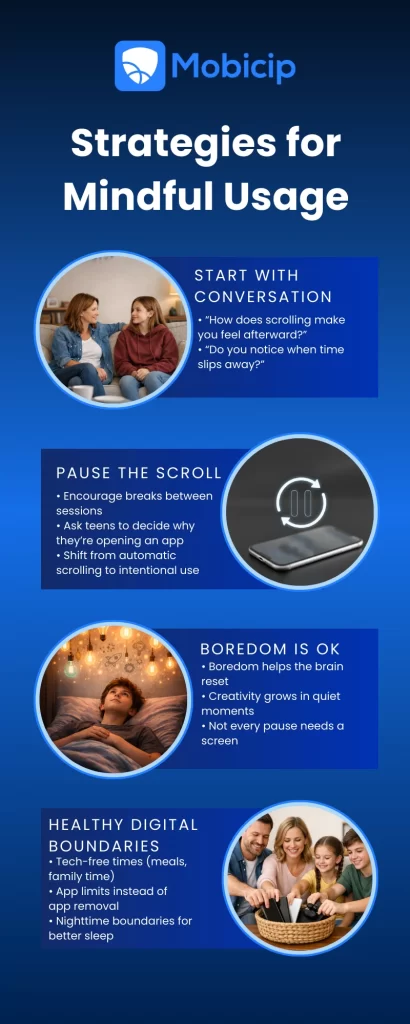
Start With Open Conversations
Simple, curiosity-driven questions can help teens notice their own patterns without becoming defensive:
- “How does scrolling make you feel afterward?”
- “Do you notice when time slips away?”
These questions shift the focus from rules to reflection, helping teens connect screen use with how it affects their mood, energy, and focus.
Encourage Mindful and Intentional Use
Teens don’t need to quit scrolling entirely to build healthier habits. Teaching mindful pauses, such as stopping briefly before opening an app or taking short breaks during use, helps move scrolling from automatic to intentional. Over time, this awareness makes it easier for teens to decide when to stop on their own.
Normalize Boredom as Brain Downtime
Boredom is not a problem to be solved, it’s a healthy state that allows the brain to rest, reset, and be creative. Helping teens get comfortable with quiet moments reduces the urge to fill every pause with a screen.
Create Structure Instead of Strict Bans
Clear, predictable boundaries support developing self-control better than blanket restrictions. Helpful examples include:
- Tech-free times (meals, family time)
- App limits instead of total app removal
- Nighttime boundaries to protect sleep
Consistency matters most. When adults model the same habits they expect from teens, boundaries feel fair, realistic, and easier to maintain.
How Mobicip Supports Brain-Healthy Habits
Parental control tools can be a helpful part of guiding teens toward healthier digital habits without creating conflict or over-restriction. Mobicip, for example, provides features designed to support awareness and self-regulation rather than simply block access.
Some ways Mobicip helps families include:
- Screen time limits to encourage regular breaks and prevent excessive scrolling
- App monitoring to understand how teens are spending their time online
- Usage insights that highlight patterns, helping parents and teens discuss habits constructively
- Age-appropriate content filters that reduce exposure to potentially harmful material

These tools act as scaffolding while teens develop the skills to self-regulate. By combining guidance, discussion, and gentle boundaries, parents can create an environment where teens learn to manage attention, emotional responses, and social interactions online. Mobicip doesn’t replace conversation or personal responsibility; instead, it supports families in making screen time intentional, balanced, and aligned with overall well-being.
Take Away
Endless feeds are more than a habit, they shape how teens experience the world, from emotions to attention and social interactions. Awareness, conversation, and gentle guidance can help teens navigate this landscape thoughtfully rather than reactively. Supporting them isn’t about restriction; it’s about fostering curiosity, reflection, and the skills to make conscious choices online. When teens learn to recognize their own patterns and experiment with boundaries, they gain not only digital self-control but also resilience, patience, and confidence in decision-making. In this way, technology becomes a tool, not a master, shaping growth rather than dictating it.