
What Is a Tin Can Phone for Kids and Is It a Good First Phone?

A tin can phone for kids is a simple voice-only communication device designed without apps, internet access, or screens. It allows children to make and receive calls while avoiding digital distractions. Many parents consider it a good first phone because it provides basic connectivity while supporting safer, age-appropriate technology use.
Parents are turning to these simple phones as a middle ground between a full-fledged smartphone and no phone at all. While they want to ensure their children are reachable, they do not want to expose them to the distractions and risks of always-on digital access. In a world of constant notifications, the appeal of tin-can phones lies in their offer of connection without overexposure. These phones help introduce communication in a more intentional, age-appropriate way.
This article explores why parents are choosing simple, tin can-style phones as a thoughtful first step into communication for their children. It looks at how these devices reduce distractions and build communication skills. And once they are ready for a smart phone, install Mobicip on it so that they can stay protected from the perils of the Internet world.
How Do Tin Can Phones Help Kids Avoid Screen-Related Risks?
Tin can phone help reduce screen-related risks by removing access to apps, internet browsing, and notifications. This limits exposure to social media pressure, cyberbullying, and excessive screen time, allowing children to focus on communication without the distractions commonly associated with smartphones.
While there is no universally agreed upon age for children to receive their first smartphones, it does seem to be reducing. A 2021 study by Common Sense Media showed that three out of ten 8-9-year-olds in the US possessed their own phone. The figure climbed to seven out of ten for 12-13-year-olds and higher still to nine out of ten for teens 14 and older.
This situation, in itself a jump from six years ago, has only jumped further. Today, 97% of US teens between the ages of 13 and 15, as well as 42% of 8-9 year olds and 30% of 6-7 year olds possess a smartphone.
In today’s hyper-connected world, it is not difficult to see why this is the case. The internet and smartphones have wormed their way into every facet of our lives, and our children haven’t escaped this change. When they ask for smartphones, it is to this status quo that they are acquiescing. Parents, however, may find themselves torn on whether or not to fulfill that request. They may experience conflicting thoughts on the matter.
Why Is Basic Communication Important for Kids?
Basic communication is important for children because it supports safety, independence, and connection with parents and trusted contacts. Being able to make calls allows children to reach help when needed while gradually learning communication skills without the complexity of full digital platforms.
The value of staying connected is undeniable.
- It is, first and foremost, a matter of basic safety. Being able to contact one’s children and stay updated on their location and well-being is important as is providing children with a way of reaching out to their parents and other responsible adults in case of emergency.
- Most communication these days takes place through a digital medium. Class updates, for example, often come through email or WhatsApp, and lessons and assignments are uploaded to online portals. Classmates and friends too keep in touch with each other through social media and messaging platforms. These are crucial parts of everyday life that parents might not want their children to miss out on.
The Fear of Too Much, Too Soon
That being said, there are various risks associated with smartphones that parents may not want to expose their children to – especially right off the bat.
- Overuse of social media, for example, has been linked to poorer mental health in teens and adolescents.
- Youngsters often experience cyberbullying, FOMO, and peer pressure online.
- The internet is also notorious for its constant stream of information and features designed to grab attention. These may negatively impact children’s productivity, especially should they grow overtly reliant on their phones.
Caught Between Two Extremes
In the light of these complications, parents may then find themselves caught between a rock and a hard place. Either they deny their children access to their own personal devices entirely, placing them at a potential disadvantage in their lives, or they provide them with the whole package, opening the floodgates to harm as well as help.
What Features Does a Tin Can Phone Offer?
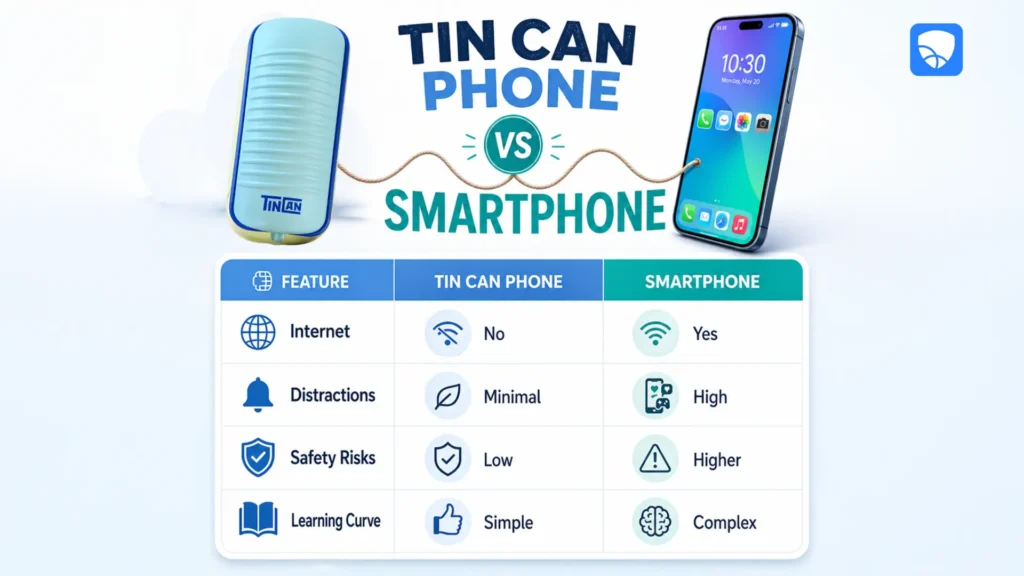
A tin can phone offers essential communication features such as voice calls, approved contact lists, and scheduled calling times, without apps, texting, or internet access. These limitations help reduce distractions while ensuring children can stay connected safely and reliably.
It is in this situation where a child is taking their first steps into personal technology that a tin can phone can prove useful. It offers a welcome intermediary stage that children can use to learn about technology and prepare for an eventual smart device. The tin can phone:
- Allows voice calls, enabling interpersonal communication and emergency contact.
- Only allows calls to and from approved contacts, addressing worries about strangers getting in touch.
- Has no apps, eliminating concerns related to excess internet use.
- Has no texts, eliminating further sources of distraction.
- Has a do-not-disturb mode that can be enabled by parents from the tin-can phone app. Also allows scheduling of callable hours.
- Connects to plug outlets and makes calls via Wi-Fi, making it more portable than a regular landline.
How Do Tin Can Phones Help Build Healthy Digital Habits?
Tin can phone help children build healthy digital habits by introducing technology in a controlled and simplified way. They encourage responsibility, communication skills, and time awareness without overwhelming children with constant notifications or entertainment, creating a strong foundation for future device use.
The tin can phone not only provides a practical solution for emergency situations but helps familiarize children with the responsibilities that come with owning technology. It instills in them values such as:
- Calling etiquette: The tin-can phone teaches children how to reach out to people while also respecting personal space. It helps them learn time-management when it comes to socializing and the importance of scheduling and compartmentalization.
- Memory: The adding and dialing of contacts is a good opportunity to help children improve their memory through the learning of phone numbers. It helps them keep track of information and encourages them to stay in touch with the important people in their lives.
- Responsibility: Owning a personal device helps children feel a sense of responsibility towards their belongings and their actions. Giving them a working piece apparatus rather than a mere prop teaches them to handle technology carefully.
When Is a Child Ready to Transition from a Tin Can Phone to a Smartphone?
A child is ready to transition to a smartphone when they demonstrate responsibility, understand boundaries, and have clear reasons for needing advanced features. This decision depends on maturity, daily needs, and family guidelines rather than a fixed age.
The tin can phone cannot meet all the demands of modern life, such as accessing class discussion forums, assignments, or online resources. In this sense, children will inevitably need access to other devices, such as a shared family computer, to participate fully in academic and digital activities. However, the purpose of the tin can phone is not to replace these technologies or serve as the only device a child will ever use.
Instead, it acts as a safe and controlled introduction to personal communication tools. It allows children to develop basic communication habits and a sense of responsibility before engaging with more complex digital environments. As children grow older and their needs expand, they may gradually transition to using smartphones and personal computers. Ultimately, the decision of when a child is ready for a smartphone should depend on individual maturity, needs, and family context, rather than being based solely on age or prevailing societal expectations.
Factors to consider before buying the child’s first smartphone
Before buying their child a smartphone, a parent may want to take into account the following factors.
- First, parents may consider the level of responsibility their child displays on a regular basis, with their belongings and their actions.
- They may consult with their children on what they would use the phone for to ensure productive intent.
- They may consider the practical demands of their children’s lives and whether a smartphone would help them cope.
- They may also consider their children’s social lives and whether a smartphone would prove beneficial or detrimental.
- They may read up on associated risks and inform their children accordingly.
- They may formulate ground rules for smartphone usage and methods of implementation.
- They may also teach their children online safety and etiquette, ensuring they use their devices responsibly.
What Should Parents Consider Before Buying a Child’s First Smartphone?
A child is ready to transition to a smartphone when they demonstrate responsibility, understand boundaries, and have clear reasons for needing advanced features. This decision depends on maturity, daily needs, and family guidelines rather than a fixed age.
A child’s journey with personal technology can be thought of as having multiple steps. The first step is providing them with a rudimentary device such as the tin-can phone highlighted in this article. The next step is providing them a more mature device, such as a smartphone, with boundaries in place. This is where Mobicip comes in.
Mobicip is a parental control device that helps parents set reasonable limits to their children’s online activity. With Mobicip, parents can:
- Set screen time limits across devices
- Create schedules and set individual app limits
- Block inappropriate apps and websites
- Filter social media content
- Receive weekly reports outlining usage patterns
Mobicip encourages communication and negotiation between parents and children. It enables self and co-regulation. It also doesn’t access text messages or calls, supporting a balanced, non-invasive approach to online regulation.
Mobicip’s blog also features a host of articles on online safety that families can use to keep themselves informed.
Frequently Asked Questions
What is the best first phone for a child?
A tin can phone is a good first phone for children to have. It acts as a basic landline would, allowing children to make and receive calls while being absent of features like apps, texting, or access to the internet. The tin can phone provides them with a personal device that they can use for communication and shields them from the distractions and dangers of smart devices. It also teaches them accountability and helps start them on their digital journey.
At what age should a child get their first smartphone?
It depends on the family in question. As a rule of thumb, it is when the child displays a satisfactory sense of responsibility and intent. A clear idea of ways in which the phone should be used and boundaries on the subject can help provide a better picture. Understanding the factors of a child’s academic and social life that may necessitate a smartphone further helps answer this question.
Why not give a smartphone right away?
Smartphones, while beneficial, carry several risks – especially for a younger demographic. Parents concerned about their wards’ mental health and academic focus may want to ease them into the world of technology rather than provide them immediate, indiscriminate access. Digital literacy, personal responsibility, and compartmentalization are skills that must be developed before entrusting one’s child with a personal device.
Conclusion
Tin-can phones are an innovative method of helping children stay connected while staying age-appropriate. They encourage a gradual adoption of technology over an immediate dive off the deep end. They help children learn digital responsibility while prioritizing safety. The use of such tools as a first step followed by the use of smart devices with safeguards like Mobicip in place is an advisable way to commence children’s digital journey. The goal isn’t to delay technology forever—just to introduce it thoughtfully.