Getting AI Advice? Signs of Depression in Teens You Shouldn’t Ignore
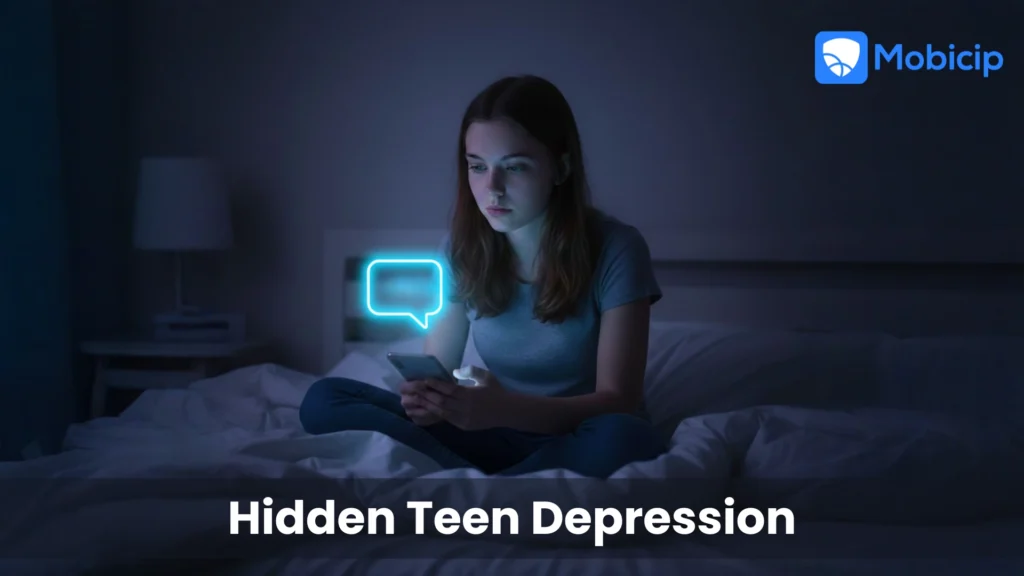
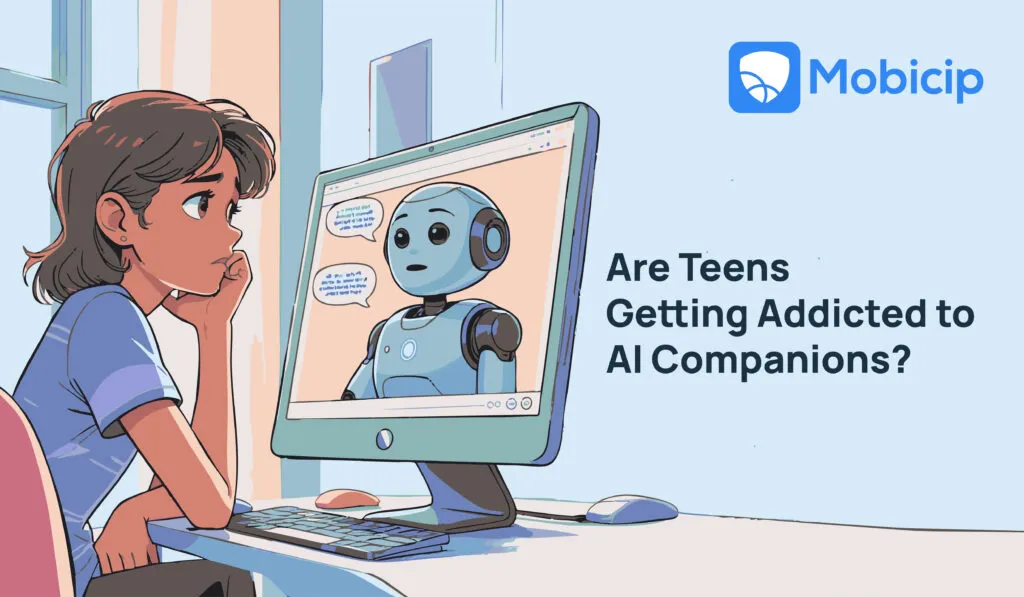
Signs of depression in teens may be missed when they begin relying more on AI communication than on human connection. Because AI tools feel private, instant, and non-judgmental, many adolescents may turn to them instead of talking to parents or friends. What appears to be harmless tech use can quietly become a substitute for real emotional support.
Recent reporting, including coverage of a JAMA Network study, raises concerns that heavy AI chatbot use may be linked to higher depression and anxiety scores. For parents, this makes recognizing the signs of depression in teens more important than ever. Early awareness allows timely support before symptoms worsen.
What Research Says About AI Use and Signs of Depression
Recent research published in JAMA Network and highlighted by NBC News examined how frequent AI use relates to mental health. The study analyzed a large national sample of adults from diverse backgrounds. A meaningful portion reported using AI tools every day, with most frequent users turning to AI for personal reasons rather than work or school tasks.
After adjusting for age, income, education, and other demographic factors, researchers found a consistent pattern. Compared with nonusers:
- Daily users showed significantly higher depression scores
- Those using AI multiple times per day also reported elevated symptoms
- Frequent users were more likely to report at least moderate depressive symptoms
- Similar patterns were observed for anxiety and irritability
- The strongest associations appeared among those using AI for personal rather than work-related reasons
- Higher use was more common among younger adults and those living in urban settings
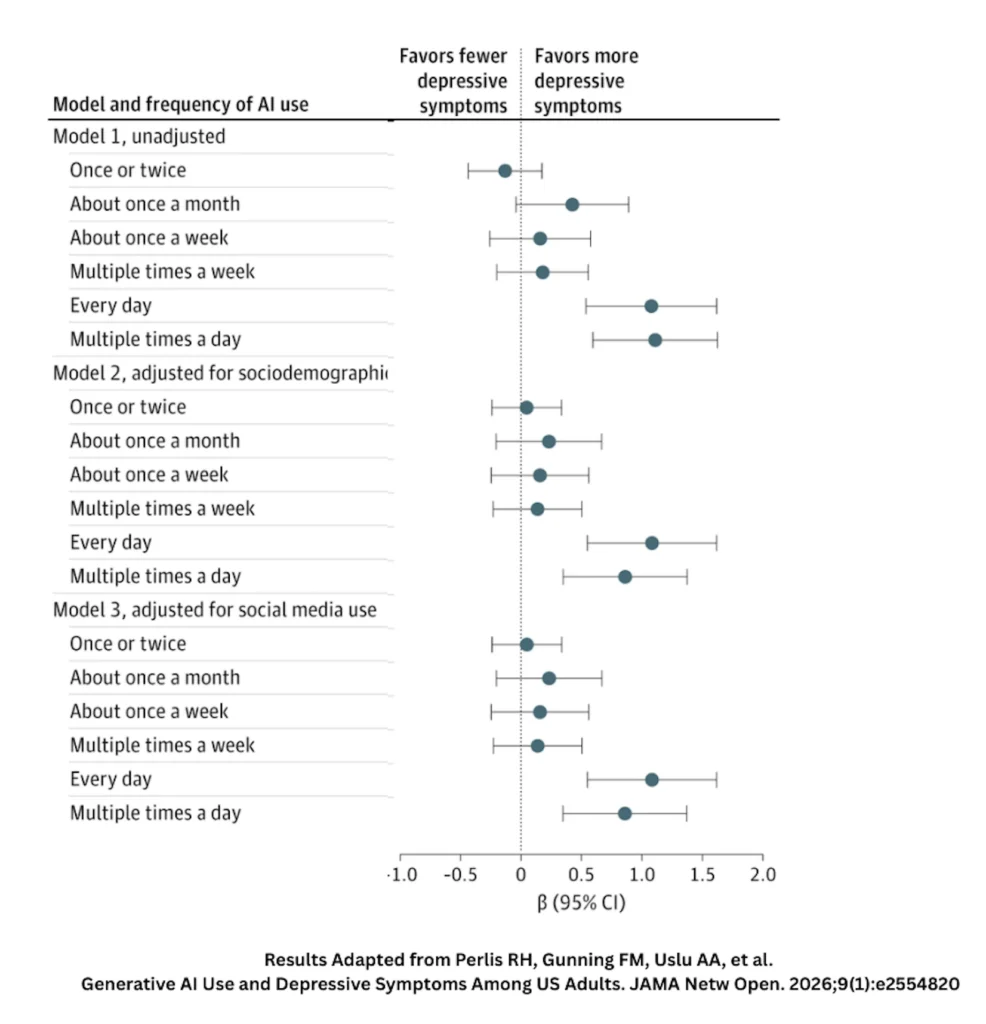
While the study focused on adults, the findings raise important concerns about how heavy, emotionally focused AI use could relate to emerging signs of depression in teens.
Why Adult Findings Matter for Teens
Although the research focused on adults, the findings are especially important when we think about adolescents. Teen brains are still under construction. The emotional center of the brain develops earlier, while the prefrontal cortex, which governs reasoning, impulse control, and long-term thinking, continues maturing into early adulthood. This imbalance can make teens more reactive to emotional stimuli and more sensitive to patterns of reassurance or rejection. As a result, habits linked to distress in adults may take deeper root in teens.
Key reasons this matters include:
- Teens are neurologically wired to seek validation and social feedback
- The reward system in the adolescent brain is highly responsive to quick reinforcement, including digital responses
- Emotional dependency behaviors can form more quickly during this stage of development
- Critical thinking and boundary-setting skills are still developing
- AI use may replace healthy conversations with friends or family, increasing isolation
To learn more, watch Mobicip’s expert discussions featuring Anitha Swaminathan, VP of Marketing and Digital Safety Advocate at Mobicip, in conversation with John Zoltner, CEO and Founder of AIChildSafety.org. In Part 4 of the series, they explore the risks of emotional dependence when children interact with AI and why it is critical for kids to understand that AI cannot replace real human relationships, especially when signs of depression may already be present.
If teens are turning to AI for emotional support, parents must know how to identify the signs of depression early.
Recognizing the Signs of Depression in Teens
Early recognition of the signs of depression in teens can prevent symptoms from worsening and reduce the risk of long-term consequences. Depression in adolescents does not always look like sadness alone. It can show up in behavior, emotions, and even physical health. The earlier we notice changes, the sooner we can step in with support.
Common Signs of Depression in Teens
For clarity, it helps to look at warning signs in three areas:
Behavioral Signs of Depression
- Withdrawal from friends or hobbies
- Avoiding school or extracurricular activities
- Increased isolation in their room
- Decline in academic performance
Emotional Signs of Depression
- Persistent sadness
- Irritability or frequent anger
- Feelings of hopelessness or worthlessness
- Loss of interest in activities they once enjoyed
Physical Signs of Depression
- Changes in sleep patterns
- Changes in appetite or noticeable weight shifts
- Low energy or ongoing fatigue
- Frequent unexplained headaches or stomach aches
How AI Can Hide Warning Signs of Depression in Teens
When teens rely heavily on AI for advice or emotional reassurance, they may appear outwardly stable while privately struggling. Because they are expressing their feelings digitally, parents may see fewer visible cues.
Warning patterns may include:
- Venting to chatbots instead of talking to parents or friends
- Reduced outward emotional expression
- Long periods of quiet device use that seem harmless
- Silence that is mistaken for independence or stability
- Digital reassurance masking deeper distress
AI is a tool. It is not a therapist, friend, or emotional anchor.
Risks of Relying on AI for Emotional Support
AI tools can feel responsive, calm, and available at any hour. For teens who hesitate to open up to parents or friends, that accessibility can seem comforting. But AI cannot provide genuine empathy, clinical judgment, or the nuanced understanding that comes from human connection. It generates responses based on patterns in data, not lived experience, emotional attunement, or professional responsibility.
When teens begin to rely on AI for emotional support, several risks can emerge:
- Reinforcement of negative thinking patterns if questions are framed around self-doubt or hopelessness
- Emotional avoidance, where teens process feelings digitally instead of addressing them in real life
- Reduced opportunities to practice communication and social skills
- Weakened resilience due to constant instant reassurance rather than learning to tolerate discomfort
- Possible normalization of unhealthy thoughts if they are not appropriately challenged
It is also important to remember that AI tools are not licensed mental health professionals. They cannot diagnose depression, assess suicide risk, or respond adequately to complex emotional crises.
Guidelines and Safety Measures for Parents
Parents do not need to ban AI tools to protect their teens. What teens need most is structure, supervision, and open conversation. When we approach AI use thoughtfully, we reduce risk while keeping communication channels open.
Monitor Use Responsibly
Start by understanding how and where your teen is using AI.
- Know which AI platforms or apps your teen accesses
- Review usage patterns, not just total screen time
- Notice if use increases during emotionally stressful periods
- Pay attention to whether AI is being used mainly for homework or personal advice
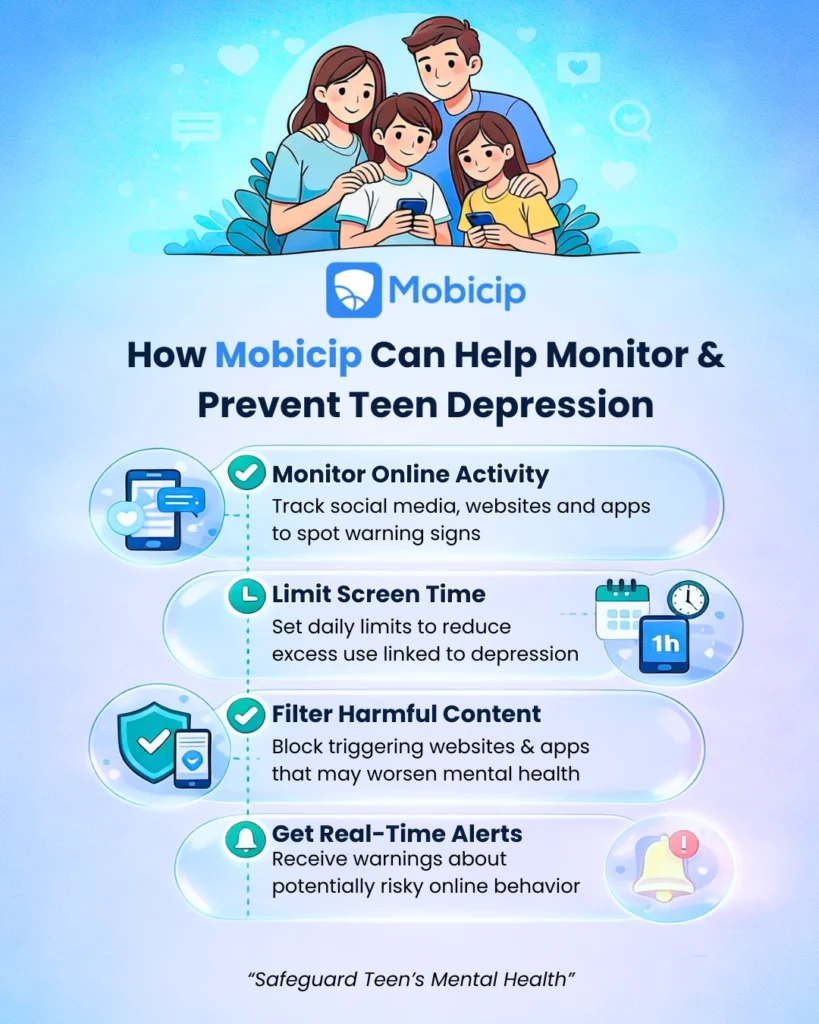
Parental control tools such as Mobicip can help by giving parents visibility into app usage, setting filters, and creating healthier digital routines without constant conflict. Monitoring should feel supportive, not intrusive.

Set Age-Appropriate Limits
Teens benefit from clear boundaries around when and how AI tools are used.
- Define appropriate uses, such as academic support
- Limit emotionally driven use late at night
- Encourage device-free time before bed
Clarify Boundaries Around Advice
Teens need guidance on what AI can and cannot do.
- AI can assist with homework and general information
- Emotional or mental health concerns should involve a trusted adult
- Teach teens to question AI responses rather than accept them as authority
Practical Ways to Support Teens
If you notice signs of depression in your teen, the goal is not tighter control. It is stronger connection. Teens who feel understood are far more likely to open up about what they are experiencing, including how they are using AI tools for advice or reassurance.
Encourage Open Conversations
- Create space for regular, low-pressure discussions about feelings and stress.
- Ask open-ended questions such as, “How have you been feeling lately?”
- Avoid judgment, quick fixes, or lectures
- Listen more than you speak
- Validate their emotions, even if you do not fully understand them
When teens feel safe talking to us, they are less likely to turn exclusively to digital sources for support.
Offer Healthy Alternatives
Help your teen build coping strategies that strengthen emotional resilience.
- Journaling to process thoughts privately
- Talking to trusted friends
- Counseling or therapy when needed
- Creative activities such as music, art, or writing
- Regular physical movement to support mood regulation
Teaching AI literacy to manage signs of depression
Teens also need to understand what AI can and cannot do.
- Explain that AI generates responses based on patterns, not true understanding
- Discuss its limitations in handling complex emotions
- Reinforce that AI cannot replace human care, empathy, or professional mental health support
When to Seek Professional Help
While some mood changes are part of normal adolescence, certain signs of depression require prompt professional attention. If symptoms are persistent, intense, or interfering with daily life, it is important not to wait and hope they will resolve on their own.
Consider seeking professional help if you notice:
- Symptoms lasting more than two weeks without improvement
- Significant academic decline or loss of motivation toward school
- Withdrawal from friends, family, and previously enjoyed activities
- Expressions of hopelessness, worthlessness, or self-harm
- Noticeable changes in personality or behavior
Trust your instincts. If something feels different or concerning, it is better to check in with a professional. Start by contacting your teen’s pediatrician, a licensed therapist, or a school counselor. If your teen expresses thoughts of self-harm or suicide, seek immediate help through emergency services or a crisis support line. Early intervention can make a critical difference in recovery and long-term well-being.
FAQ
What are early signs of depression in teens?
Early signs of depression in teens often appear as behavioral withdrawal, persistent sadness, or increased irritability. Parents may also notice physical changes such as disrupted sleep, changes in appetite, low energy, or frequent unexplained aches. A sudden loss of interest in activities they once enjoyed can also be an early warning sign.
Can AI advice worsen teen mental health?
AI tools themselves are not designed to harm, but over-reliance on AI for emotional reassurance can increase isolation. When teens turn to chatbots instead of trusted adults or friends, signs of depression may be masked rather than addressed.
How can parents help a depressed teen?
Parents can help by encouraging open communication, reducing isolation, and paying attention to digital habits. Creating a safe space for honest conversations and seeking professional guidance when symptoms persist are important steps.
When should parents seek professional help?
If signs of depression last longer than two weeks, become more intense, interfere with school or relationships, or include talk of self-harm, professional support is essential.