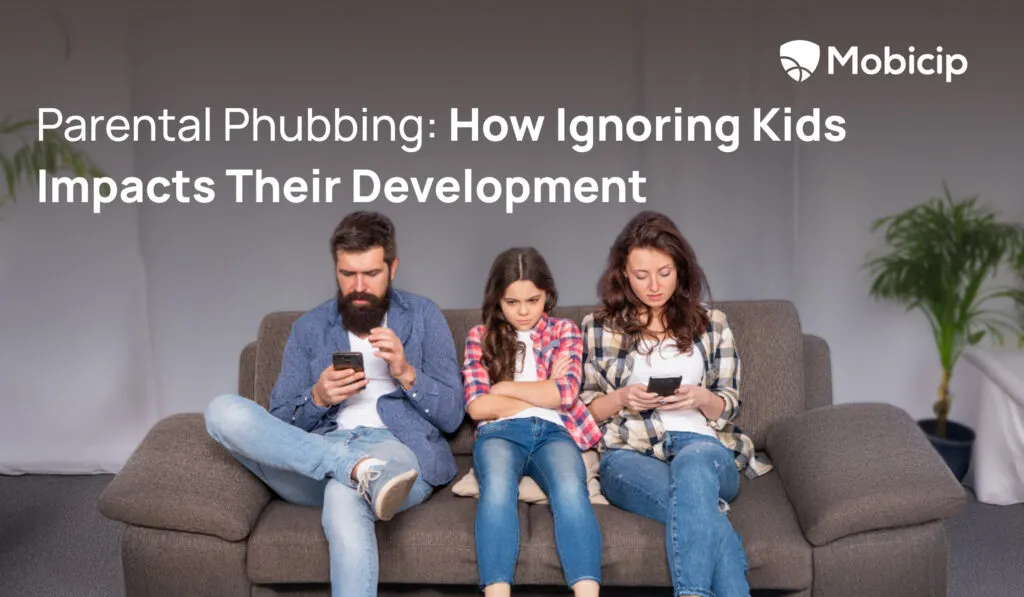
Cognitive Development in Childhood and Screen Time: What New Research Shows

Cognitive development in childhood is influenced by many factors, including screen time, which new research suggests may both shape and reflect children’s cognitive abilities.New research suggests that the relationship can work in both directions. Screen habits may predict changes in children’s cognitive skills, while those same skills may influence how children use screens.
This means that the impact of screen time depends on more than hours spent online. A child’s age, activities, temperament, and family environment all matter.
Read on to learn more, and how Mobicip can help.
Key Takeaways
- Screen time and cognitive skills can influence each other over time.
- Large research reviews link greater screen use with modest differences in language and academic performance, but findings vary across skills.
- Educational content, interactive activities, and parental involvement can make screen experiences more valuable.
- Young children particularly need conversation, play, movement, and sleep for healthy cognitive development.
- Consistent screen-time routines and parental controls can help families maintain a healthy balance.
Why Does Cognitive Development in Childhood Matter So Much?
Cognitive development in childhood refers to how children learn to think, remember, understand language, solve problems, and make decisions.
These abilities develop through everyday experiences. Building a tower teaches spatial reasoning. Listening to stories strengthens language and memory. Playing games helps children practise patience and flexible thinking.
An important part of child cognitive development involves executive functions, which include:
- Working memory: Holding information in mind while completing a task.
- Inhibitory control: Resisting impulses and avoiding distractions.
- Cognitive flexibility: Switching between ideas, rules, or activities.
These skills support learning, emotional regulation, and independence. As our guide to early childhood development explains, children build them through active engagement with their surroundings.
What Does New Research Say About Screen Time and Cognitive Development in Childhood?
Recent studies suggest that screen time effects on children are neither uniformly harmful nor universally beneficial.
What Did a Review of 2.8 Million Children Find?
A 2026 umbrella review published in JAMA Pediatrics examined 23 meta-analyses covering approximately 2.8 million children across 64 countries.
Researchers found that greater screen exposure was associated with:
- Modestly lower language skills and academic achievement.
- Higher levels of some emotional and behavioral difficulties.
- No statistically significant overall association with executive functioning.
These findings are important because they show that different cognitive skills may respond differently to screen experiences.
They also describe population-level associations, not the inevitable outcomes for individual children.
Why Do Newer Studies Show More Complex Links?
A September 2026 study discussed by PsyPost followed 87 children from approximately ages 2½ to 7½.
Researchers examined how frequently parents used screens to calm upset children and how children’s executive functions developed.
They identified three patterns:
- 76 children (87.36%) showed a bidirectional relationship: media use and cognitive skills predicted each other over time.
- Six children (approximately 7%) showed a pattern in which media use primarily predicted subsequent cognitive skills.
- Five children (approximately 6%) showed different patterns for cognitive flexibility and inhibitory control.
The study did not establish whether using screens to calm children improved or worsened their cognitive development.
Instead, it highlighted an important possibility: children’s existing abilities and their screen habits may shape one another.
What Did a Finnish Study Find About Screen Time?
A 2026 Finnish study involving 260 adolescents reported an unexpected finding. Greater accumulated screen time during childhood and adolescence was associated with better performance on certain cognitive measures in adolescence.
This challenges the assumption that more screen time must always mean poorer thinking skills.
However, the study was observational. It did not establish that screens improved cognition or that additional recreational screen time would benefit children.
Does a Link Between Screen Time and Cognition Mean Cause and Effect?
Not necessarily.
A child who struggles with self-control might spend more time on screens. Frequent screen use could also affect opportunities to practise self-control. Both patterns may occur together.
Family routines, sleep, parenting practices, and learning environments can influence these relationships.
The important question is not simply whether screens affect children, but which children, which activities, and under what circumstances.
Which Cognitive Skills Can Screen Time Affect Most?
How Can Screen Time Influence Language and Speech?
Young children develop language through conversations, storytelling, and responsive interactions.
A JAMA Pediatrics review of 42 studies found that greater screen exposure was associated with weaker language skills. However, educational programming and watching together with caregivers were associated with stronger language outcomes.
Talking about what children watch can turn an otherwise passive experience into a learning opportunity.
What About Attention and Working Memory?
Working memory helps children follow instructions, solve problems, and complete schoolwork.
Some studies associate extensive screen viewing with weaker attention or memory performance. Others find mixed or negligible relationships.
A useful approach is to protect uninterrupted time for homework, reading, and creative activities rather than assuming every digital activity affects attention equally.
Can Screen Time Influence Self-Control and Emotional Regulation?
Children learn emotional regulation by experiencing feelings and practising ways to manage them.
Using a screen occasionally to calm an upset child is not inherently harmful. However, relying on devices as the primary response to frustration may leave fewer opportunities to practise other coping strategies.
Parents can also encourage breathing, conversation, movement, or quiet play.
Is All Screen Time Bad for Cognitive Development in Childhood?
No. Screen time is not a single activity, and its developmental value varies.
Is Passive Watching Different From Interactive Screen Use?
Passive viewing usually involves watching content without meaningful participation. Interactive use requires children to make decisions, solve problems, create, or communicate.
An age-appropriate puzzle game, for example, may require more active thinking than endlessly watching short videos.
Still, interactivity alone does not guarantee educational value. Content quality and time spent matter.
Does Educational Content Make a Difference?
Educational programs can introduce vocabulary, scientific ideas, and problem-solving activities.
Parents can look for content that:
- Matches their child’s developmental stage.
- Encourages questions and exploration.
- Avoids excessive distractions.
- Inspires activities beyond the screen.
The best educational content gives children something they can use in the real world.
Is Watching Together Better Than Watching Alone?
Yes, especially for young children.
Parents can ask questions, explain unfamiliar ideas, and connect on-screen events with everyday experiences.
Co-viewing also helps children understand what they watch rather than simply consuming it.
Does the Age a Child Starts Using Screens Matter?
Yes, particularly during early childhood.
Babies and toddlers depend heavily on face-to-face interaction, movement, sensory exploration, and play.
Research has associated later introduction to screen use with stronger language outcomes, although this does not establish a precise age at which screens become beneficial.
As children grow, their ability to use digital tools purposefully also develops. Parents can gradually introduce educational activities and age-appropriate independence.
How Much Screen Time Is Recommended by Age?
The World Health Organization’s guidelines for children under five provide age-based recommendations. For older children, the American Academy of Pediatrics emphasizes balanced routines rather than one universal daily limit.
Screen-time guidance varies according to a child’s age and developmental needs.
- Under 2 years: Avoid sedentary screen time wherever possible. Interactive video calls with family members are a commonly accepted exception.
- Ages 2–4: Limit sedentary screen time to no more than one hour per day. Less is better, particularly when it allows more time for active play and social interaction.
- Ages 5–12: Establish consistent recreational screen-time limits that leave enough room for sleep, physical activity, learning, and family time.
- Ages 13–17: Work with teenagers to establish reasonable digital boundaries, focusing on age-appropriate content, bedtime routines, schoolwork, and overall digital wellbeing.
Parents can explore our guide to healthy screen time limits for kids for additional practical recommendations.
How Can Parents Support Healthy Cognitive Development in Childhood?

How Can Predictable Screen-Time Limits Help?
Children benefit from routines they understand.
Set clear expectations around homework, meals, recreation, and bedtime. Involve older children in discussing these rules.
A balanced approach combines boundaries with communication, as discussed in our article on parenting styles and screen time.
Why Should Screens Stay Out of Bedtime?
Sleep supports memory, learning, attention, and emotional regulation.
Keep devices away from sleeping areas and establish a calming, screen-free bedtime routine.
The American Academy of Pediatrics’ family media plan also recommends protecting screen-free periods and turning off unnecessary notifications.
How Can Parents Choose Screen Activities That Give Something Back?
Encourage activities that extend beyond digital entertainment.
Children might watch a nature program and then explore outdoors, learn a drawing technique and try it on paper, or practise coding and build a simple project.
Balance these experiences with reading, conversation, physical activity, and fun family games.
How Does Mobicip Help Families Build Healthier Screen Habits?
Healthy screen habits are easier to maintain when families have clear boundaries and practical tools to support them.
Mobicip helps parents manage children’s digital routines through:
- Daily screen-time limits: Set age-appropriate boundaries for device use.
- Schedules: Create screen-free periods for homework, meals, play, and bedtime.
- App limits and blocking: Reduce access to distracting entertainment apps.
- Content filtering: Restrict access to inappropriate websites and online material.
- Activity insights: Review digital habits and adjust family rules when necessary.
Mobicip cannot directly improve cognitive skills. However, it can help protect time for activities that support healthy development.
The goal is to make technology a useful part of childhood without allowing it to dominate everyday life.
Frequently Asked Questions
Is Screen Time Linked to Speech Delay in Toddlers?
Greater screen exposure has been associated with weaker language development in some studies. However, screen time alone does not establish the cause of a speech delay. Parents with concerns should consult a pediatrician or speech-language professional.
Is Screen Time Linked to ADHD?
Some studies report associations between excessive screen time and ADHD symptoms. However, these findings do not establish that screen use causes ADHD, a complex neurodevelopmental condition.
Is TV Worse Than Tablets for Young Children?
Not necessarily. Content, duration, interaction, and parental involvement matter more than the device alone. Background television can also interfere with everyday conversation.
Are Video Calls Okay for Babies?
Yes. Interactive video calls with family members are generally treated differently from passive screen viewing because they involve responsive social interaction.
Do Video Games Help or Hurt Cognitive Development in Childhood?
Some games encourage planning, problem-solving, and flexible thinking. Others may provide limited developmental value. Benefits depend on the game, context, duration, and skills being practised.
What Helps Kids Who Have Had a Lot of Early Screen Time?
Start with manageable changes. Introduce predictable limits, protect sleep, encourage conversation, and provide opportunities for active play. Development is ongoing, and positive routines remain valuable.
Can Parental Control Apps Help Manage a Child’s Screen Time?
Yes. Apps such as Mobicip help parents set limits, create schedules, and manage access to content. They work best alongside communication, age-appropriate guidance, and engaging offline activities.


The Bottom Line
Cognitive development in childhood is shaped by many experiences, including digital ones. Recent research suggests that screen time and cognitive skills interact in complex ways.
Rather than treating every minute on a screen as harmful, parents can focus on what children watch, how they engage, and what other activities fill their day.
Healthy cognitive development is not about eliminating screens. It is about making room for everything else children need to grow.