What Is AI Friendship for Kids, and What Can It Teach About Real Relationships This Valentine’s Day?
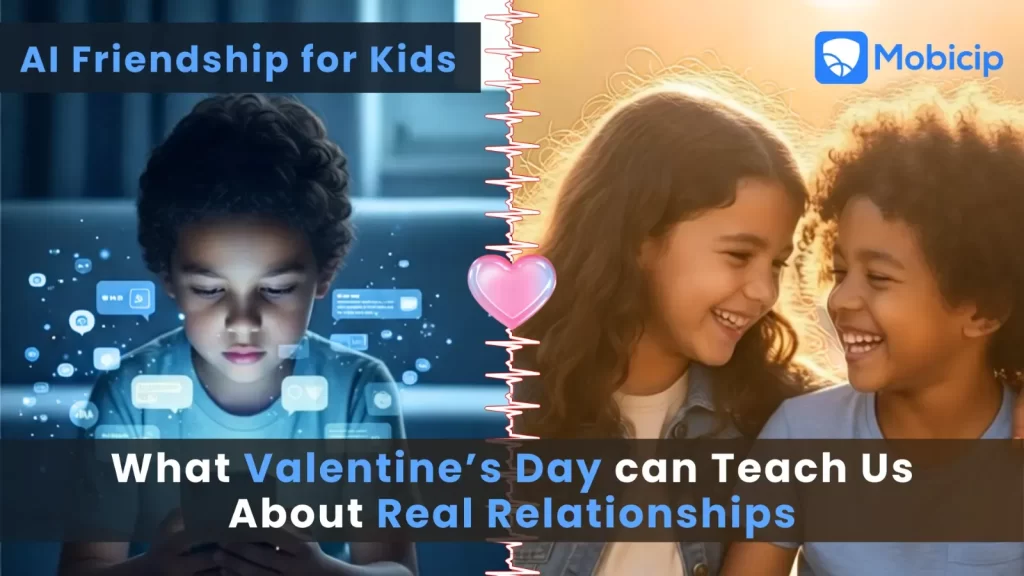
AI Friendship refers to the growing trend of children forming emotional connections with AI-powered chatbots and virtual companions that can talk, listen, and respond in ways that feel personal. These AI interactions may look harmless, or even helpful, on the surface, offering kids company, answers, or a safe space to talk. But unlike human friendships, AI friendships are designed, programmed, and always available, which makes them very different from the real relationships children build with peers, family, and teachers.
This topic matters because children are encountering AI much earlier than adults realize. Many kids now chat with AI for fun, comfort, or curiosity, sometimes without fully understanding what AI is, or isn’t. As February brings renewed focus on online safety and Valentine’s Day highlights connection and relationships, it’s a timely moment to pause and reflect on what kids are learning about friendship, empathy, and emotional support from AI.
In this article, we’ll explore how AI friendships influence children’s emotional and social development, what lessons they can and can’t teach about real relationships, and how parents can set healthy boundaries. We’ll also look at practical ways tools like Mobicip can help families guide safe, balanced AI use while keeping real-world connections at the center.

How AI Friendship Affects Kids’ Social, Emotional, and Behavioral Development?
AI friendship can influence how children understand emotions, communication, and connection. Interacting with AI that is always available and agreeable may shape expectations around relationships, emotional support, and conflict. While some children find comfort in these interactions, overreliance can affect social skills, emotional regulation, and engagement with real-life relationships.
AI friendship can shape how children understand emotions, communication, and connection, sometimes in subtle ways. When kids interact with AI companions that are always available, patient, and agreeable, it can influence their expectations of relationships and emotional support. For some children, these interactions feel comforting and low-pressure; for others, they may blur the line between real and simulated connection. Because children are still learning how to read social cues, handle disagreement, and regulate emotions, repeated interactions with AI can quietly affect how they relate to people both online and offline.
What Are the Positive and Negative Effects of AI Friendship on Kids?
AI friendship can offer a few benefits when used thoughtfully. It may help children practice expressing feelings, ask questions they feel shy about asking adults, or feel less alone during moments of boredom or stress. Some kids use AI conversations to rehearse social situations or build confidence in communication.
At the same time, there are risks to be aware of:
- Reduced motivation to engage in real-life friendships that require effort and compromise
- Unrealistic expectations of constant attention, validation, or agreement
- Difficulty handling conflict, disappointment, or emotional boundaries
- Increased screen time replacing unstructured play, face-to-face interaction, and real-life friendships.
How Can Parents Help Kids Navigate Emotions in AI Friendships?
Parents play a key role in helping children make sense of what AI can, and cannot, provide emotionally. Open conversations help children understand that AI responds based on programming, not feelings, care, or shared experience.
Practical ways parents can support emotional balance include:
- Talking openly about the difference between AI responses and human emotions
- Encouraging kids to share how AI interactions make them feel
- Watching for signs of emotional dependence or withdrawal from real relationships
- Reinforcing the value of friendships that involve listening, disagreement, and empathy
- Creating space for offline connection through play, family time, and peer interaction
Used with guidance, AI can be one part of a child’s world, but it should never replace the messy, meaningful work of real relationships.
What Safety and Digital Well-Being Concerns Should Parents Know About AI Friendship?
AI friendship raises important safety and digital well-being concerns, including increased screen time, exposure to age-inappropriate content, privacy risks, and emotional dependence. Because AI feels conversational, children may share personal details or rely on it for emotional support. Clear boundaries, education, and balanced screen habits help reduce these risks while supporting healthy development.
As AI friendships become part of children’s digital lives, safety and well-being need to stay front and center. While AI tools may feel more “personal” than games or videos, they are still part of a child’s overall digital presence and should be treated with the same care. Without clear boundaries, AI interactions can quietly extend screen time, expose children to age-inappropriate content, or create emotional reliance. Helping kids build healthy habits around AI isn’t about banning technology; it’s about teaching balance, awareness, and self-regulation so digital interactions support, rather than replace, real-world experiences.
Screen-Time Limits for AI Friendship
AI friendship counts as screen time, even when it feels conversational or educational. Parents can include AI interactions within existing screen-time routines rather than treating them as an exception.
General age-appropriate guidelines to keep in mind:
- Ages 5-7: Short, supervised use within a daily screen-time limit of about 1 hour
- Ages 8-12: 1–2 hours per day across all screens, including AI tools
- Teens: Flexible limits focused on balance, sleep, schoolwork, and offline social time
It also helps to set tech-free times, such as meals, bedtime, and family activities, to reinforce that AI conversations don’t need to be constant or on demand.
How Can Parents Guide Safe AI Interactions for Kids?
Guiding safe AI use starts with involvement, not surveillance. Children benefit when parents stay curious about how and why they use AI, and when expectations are clear.
Practical ways to support safe AI interactions include:
- Explaining what AI is and that it doesn’t have feelings, secrets, or loyalty
- Encouraging kids to avoid sharing personal details or private emotions
- Checking which AI tools or platforms your child is using and why
- Watching for changes in mood, sleep, or social behavior linked to AI use
- Using parental control tools like Mobicip to manage screen time, filter content, and get alerts if potentially risky interactions appear
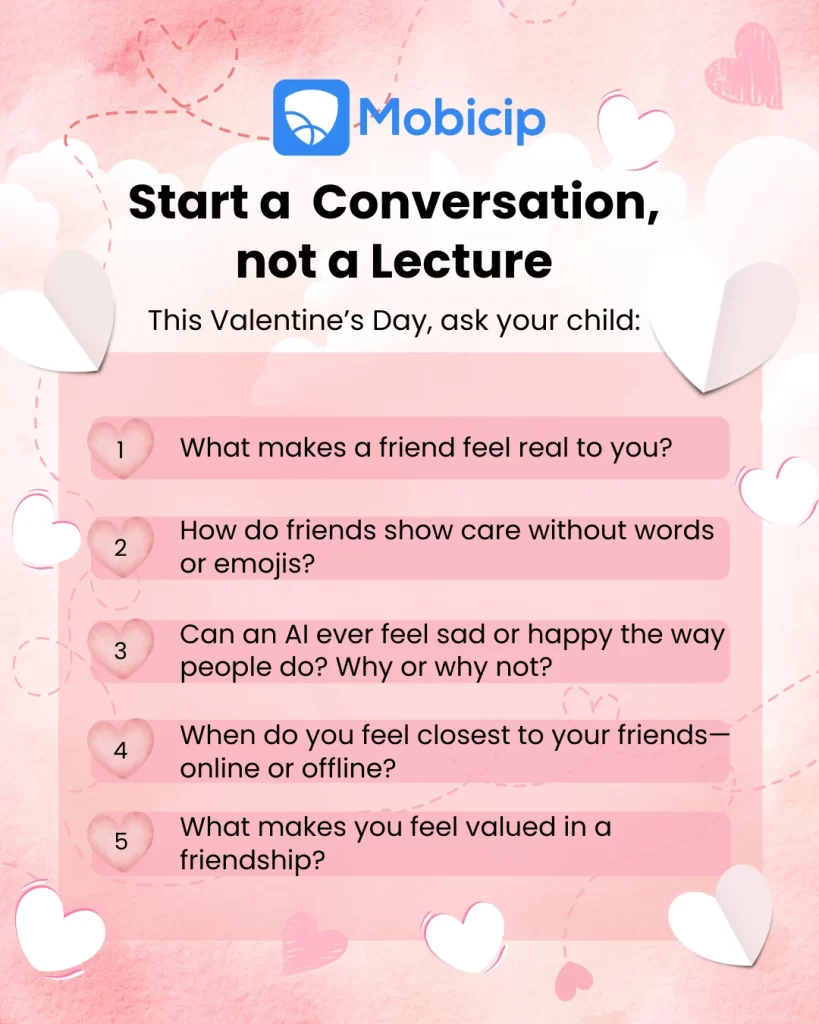
Helping Kids Understand Privacy and AI Limitations
Beyond emotional boundaries, children also need help understanding how AI uses information and why privacy matters in AI conversations. Because AI feels conversational, kids may forget they’re interacting with a system that processes data rather than a person who can keep secrets. Teaching this early helps children develop digital awareness that will serve them well beyond AI tools.
Parents can guide this understanding by:
- Explaining, in age-appropriate ways, that AI conversations may be stored or reviewed
- Encouraging kids to avoid sharing personal details, family information, or sensitive experiences
- Helping children recognize that AI answers can be inaccurate or biased
- Reinforcing that AI should never be used for advice about safety, health, or other emotional problems
- Teaching kids to pause and question responses instead of accepting them at face value
When children learn that AI is a tool with limits, not an authority or confidant, they become more thoughtful, safer, and more resilient digital users.
How Mobicip Can Help Parents Manage AI Friendship Safely?
As AI friendship becomes part of children’s everyday digital lives, parents need tools that offer visibility, guidance, and balance, without constant monitoring. Mobicip helps families manage AI interactions as part of a child’s broader online experience, making it easier to support healthy relationships both on and offline.
Key Mobicip features that directly support safe AI friendship include:
- Screen Time Management: Mobicip allows parents to set daily screen-time limits and schedules, ensuring AI conversations don’t quietly take over time meant for sleep, schoolwork, or real-life friendships.
- Content Filtering Across Apps and Browsers: AI tools are often accessed through browsers or third-party apps. Mobicip’s filtering helps block age-inappropriate content and reduces the risk of children encountering harmful or misleading responses during AI interactions.
- Activity Monitoring and Insights: Parents can see how much time children spend on AI platforms as part of their overall digital activity, helping identify patterns like overuse or emotional reliance early.
- Real-Time Alerts for Potential Risks: Mobicip can notify parents when something potentially risky appears, offering a chance to step in with guidance rather than punishment, especially important when AI conversations touch on sensitive topics.
- Healthy Digital Habit Building: By combining limits, visibility, and conversation starters, Mobicip supports families in teaching balance, emotional awareness, and responsible technology use, skills that matter far beyond AI friendship.

Used thoughtfully, Mobicip helps parents stay involved, set boundaries, and keep real-world relationships at the heart of their child’s digital life.
Frequently Asked Questions
Q1: What is AI Friendship, and how does it affect my child?
AI Friendship refers to children forming conversational or emotional connections with AI tools, such as chatbots or virtual companions. These interactions can feel supportive and engaging, but they are not real relationships. AI Friendship can influence how children express emotions, seek comfort, and spend time online. This emphasises the importance of parental guidance.
Q2: How does AI Friendship impact my child’s social and emotional development?
AI Friendship can help children practice communication and emotional expression, especially for shy or anxious kids. However, overuse may reduce opportunities to build real-world social skills, such as handling disagreement, reading emotions, and maintaining boundaries. Balance is key to healthy development.
Q3: How does ChatGPT affect my child’s mood, friendships, and emotional growth?
ChatGPT can positively affect mood by offering quick responses and nonjudgmental interaction. At the same time, frequent reliance may limit emotional resilience or reduce motivation to engage with peers. Children benefit most when ChatGPT is used as a tool, not an emotional substitute.
Q4: Can AI Friendship replace my child’s real-life friendships?
No. AI Friendship cannot replace real-life friendships because AI cannot experience emotions, mutual care, or shared growth. While AI can supplement learning or conversation, children still need human relationships to develop empathy, trust, and emotional understanding.
Q5: What can my child learn about real-world relationships from AI Friendship?
With guidance, children can learn communication skills, emotional vocabulary, and reflection through AI interactions. Parents can also use AI Friendship as a teaching moment to discuss empathy, boundaries, and why real relationships involve effort, compromise, and mutual feelings.
Q6: How can I keep my child safe while they have AI Friendships or conversations?
Safety starts with conversation and clear boundaries. Parents should explain what AI is, discourage sharing personal information, monitor usage, and set screen-time limits. Watching for signs of emotional dependence or behavioral changes helps ensure AI use stays healthy and age-appropriate.
Q7: What practical steps can I take to balance AI Friendship and real friendships for my child?
Parents can schedule tech-free times, encourage offline play and peer interaction, talk regularly about online experiences, and model healthy technology habits. Treat AI Friendship as one small part of a child’s digital life, not the center of their social world.
Q8: How can Mobicip help parents ensure safe AI Friendship experiences for kids?
Mobicip helps parents manage AI Friendship by setting screen-time limits, filtering content, monitoring digital activity, and providing alerts for potentially risky interactions. These tools support safer AI use while keeping real-world relationships, emotional health, and family connections front and center.